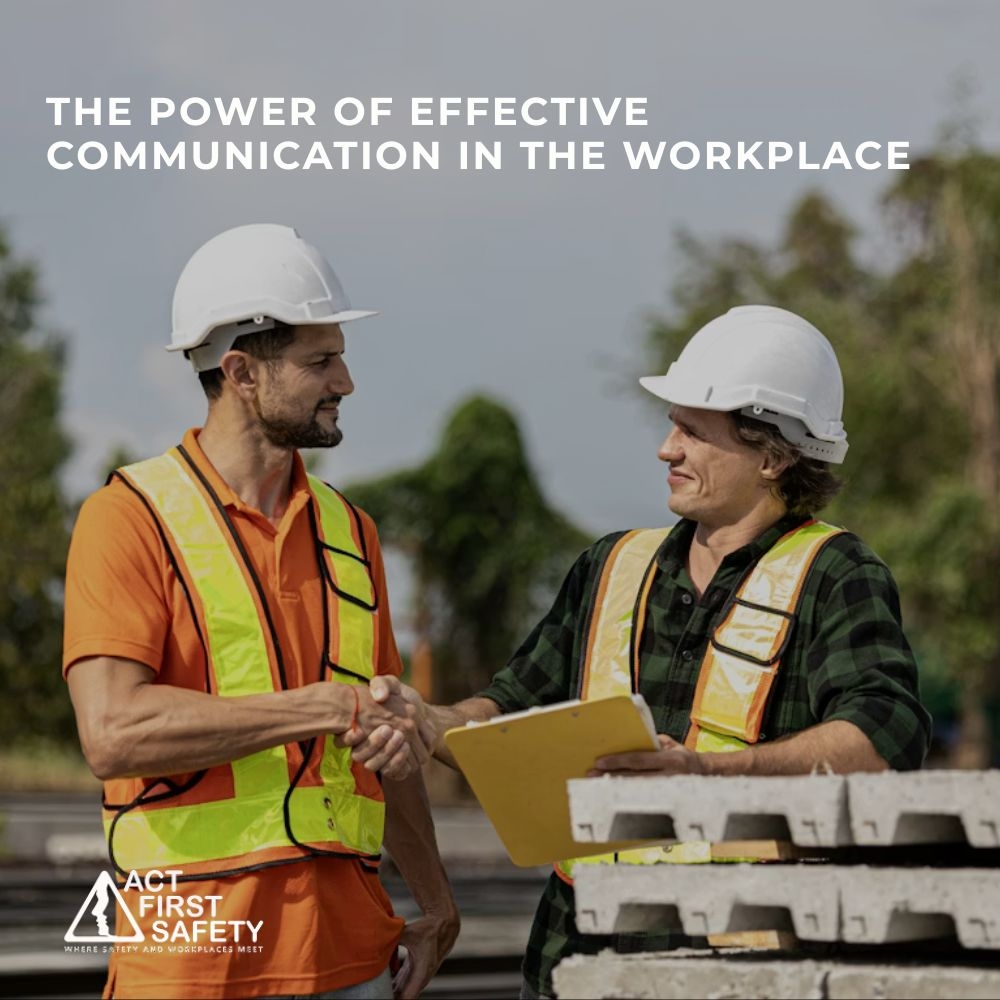
We all know what communication is, but what does effective communication look like in the real world? And why is it such a big deal in fast-moving industries, or anywhere in the workplace, for that matter? Have accidents or massive losses ever happened because people didn't communicate properly?
In any workplace, effective communication is considered a job only for bosses. However, workers also play a role in making sure the communication is clear and safe to follow. Take, for example, reporting near misses, which is an integral part of effective communication that can incidentally help in the prevention of future accidents.
Communication is actually critical for workplace safety, even if it is, ironically, not talked about much. In today’s blog, Act First Safety, provider of safety training courses in Ontario, will take a closer look at what effective communication actually means and why it's so crucial for keeping everyone safe on the job.
We will also discuss how organizations, particularly in construction and manufacturing, can get their communication right to protect both their people and their productivity.
What is Effective Communication In The Workplace?
Effective communication encompasses a two-way conversation where both the person sending the message and the person receiving it are on the same page.
It's not just screaming instructions or sending emails. It’s about making sure that the message is understood and that the right action is taken accordingly. In other words, it's about speaking clearly and listening just as carefully.
Good communication is key to saving time, money, and lives.
In the world of construction and manufacturing, effective communication can take many forms, such as:
- A supervisor taking the time to explain safety procedures to a team before they start work
- A worker bringing up a risk or a workplace hazard to their manager's attention
- A safety notice being shared digitally across the organization
- A clear sign pointing everyone in the right direction in case of an emergency
It's all about getting the message across clearly and making sure everyone understands what's going on.
Why Effective Communication Matters In Workplace Safety
Ontario workplaces bring their own dangers. Working at heights, in confined spaces, in environments with asbestos, or handling propane – each of these high-risk activities can backfire if a proper line of communication is not maintained during work. That is just one of the many other reasons why effective communication is critical to workplace safety:
Worker Engagement
If workers feel like their voices are being heard and their needs are being taken seriously, they will be more likely to follow safety rules and take an active role in spotting hazards.
Teamwork
On construction sites, many different tradespeople work together at the same time. If good communication is maintained between them, electricians, masons, and crane operators etc., can get on with their jobs without any trouble or accidents.
Motivation & Encouragement
When workers know that their input is valued and that they're being listened to, they are more likely to want to suggest better ways to do things. Good communication builds trust and respect between managers and workers.
Productivity
Wasting time on unclear instructions or miscommunication leads to uncertainty, which in turn can cause delays and budget overruns – especially if workers end up performing the wrong tasks. Good communication can prevent this by keeping things running smoothly.
Worker Retention
When communication is clear, positive, and respectful, workers are more likely to stick around for the long haul, which saves organizations the hassle and expense of recruiting and training new people.
Making Communication Work In Construction & Manufacturing
While training programs such as working at heights training, competent supervisor training, and JHSC training etc. teach workers and employees basic workplace communication, they are not enough to ensure the practice of proper communication methods on-site. For that, employers need to step in and do their part.
Verbal Communication Onsite
Verbal instructions are still the most common way of communicating on-site. Here is how to make sure the intended message is effectively sent and received:
- Speak clearly: Keep your messages short, simple, and free of jargon that might confuse people
- Know your audience: Don't swamp workers with information they don't need to know and keep it relevant and brief
- Check they understand: Ask workers to repeat back what you have told them, or demonstrate that they understand by it
For example, explaining confined space entry procedures requires you to make sure not only the person entering the space but also the person watching out for them understands their role.
Digital Communication
Emails, instant messaging and safety management software are all key parts of modern digital communication. They are essential for day-to-day operations. To get the most out of them, everyone on the team must:
- Write clearly: Keep your messages short, simple and to the point
- Target the right people: Determine if the information needs to go to just one person or to the entire team
- Track responses: Ask people to confirm if they have got the message, or follow up to make sure they're taking the correct (and safe) action
Digital communication is especially useful for sharing safety notices, inspection plans or any updates about ongoing projects.
Weekly Safety Meetings and Toolbox Talks
Weekly meetings and toolbox talks are not just about compliance. They are actually a key part of good communication. They help build trust, resolve issues immediately, and make sure everyone works with the same information. They also support mutual exchange of information, keeping workers informed and engaged.
Major benefits of weekly engagements include:
- Shared knowledge about hazards and protective measures
- Open floor to ask questions, share experiences and suggest ways to do things better
- Enhanced confidence to point out things that are unsafe without fear of being reprimanded
- Workers truly stand to gain a lot with clear, transparent, and tolerant weekly meetings.
Effective communication has a direct impact on cooperation (i.e., internal responsibility system or IRS) and safety in the workplace.
Access to Management
It is essential for workers to feel free to raise concerns, make suggestions, or just ask questions to their supervisors. This often means putting in place an open-door policy or some kind of formal comments system to help knock down barriers that might be created by the usual organizational hierarchy. This transparency helps remove barriers to communication.
Visual & Signage Communication
Written or verbal formats are not the only ways to communicate effectively. In places like construction or manufacturing, a good sign and clear markers are as good as an announcement on a loudspeaker. Here are essential signs that should be put in relevant spots:
- Warning signs for high voltage areas or confined spaces
- Direction signs for emergency exits, muster points or the like
- Instruction signs that cover on-site requirements like personal protective equipment (PPE) use or "lockout/tagout" reminders
- Traffic control signs like barriers, cones, flags, etc., that communicate vehicular and pedestrian traffic rules
Signs that are well designed can save lives – especially in noisy environments where you cannot rely on just hearing what's going on. These forms of communication are a great heads-up on potential hazards for anyone present on-site.
Emergency Communication Systems
Time is a precious commodity in emergencies. So, it's really important that workers are super familiar with the emergency communication systems at work and know just what to do in a crisis.
To make these systems work well, critical crew members must undergo safety training and gain hands-on experience that demonstrates their competency. This ensures that safety protocols are understood properly so that life-saving efforts can be performed in time.
Emergency coordinators, like Joint Health and Safety Committee members and competent supervisors, should get feedback from the workers to improve overall safety and emergency preparedness in the workplace.
Some examples of emergency situations where effective communication is critical include fire drills, evacuation drills, confined spaces rescue plans, working at heights rescue plans, and first aid response, among others.
Effective emergency communication ensures that people do not just know where the emergency numbers are, but they can also take quick action when things get intense.
Building a Culture of Communication
Effective communication isn't just a set of practices - it's the foundation of your entire company’s culture. In places like construction or heavy industry, building this type of culture entails:
- Leaders setting the right tone by communicating clearly and respectfully
- Workers feeling empowered to speak up without worrying about punishments or repercussions
- Information exchange happening both ways to ensure incidents are reported and workers stay safe
By prioritizing effective communication, employers can build a workplace where safety is paramount and where people feel a real sense of responsibility, not just for their own safety but for the safety of everyone around them.
In Summary
In the high-pressure world of construction and manufacturing, communication isn't a management buzzword - it's a lifeline. Proper communication makes a big difference to how safe workplaces are while reducing risks and boosting morale. It also keeps both workers and projects safe from costly delays or potential liabilities.
In high-risk workplaces like construction and manufacturing, getting clear communication right can actually save lives. One of the first steps to doing that is to get proper safety training for your crews.
Act First Safety provides CPO-approved training programs via its Scarborough facility in Ontario. Located off Highway 401, our training center can hold large crews and ensure the completion of multiple essential courses in a span of a couple of days. Contact us to learn about available courses and their structures.
FAQs
How does poor communication increase workplace risk?
Chaos and confusion are the natural outcomes of poor communication. Both can quickly give rise to unsafe work practices, missed hazards, and equipment misuse, thus increasing the chances of workplace accidents and injuries.
What is the importance of hazard reporting?
Hazard reporting is critical for the early detection of workplace hazards so that proactive measures can be taken to resolve them and prevent avoidable accidents, injuries, and liabilities.
How does communication improve teamwork on jobsites?
Clear communication across departments and trades allows them to coordinate and collaborate with each other in a more effective manner, thereby reducing disruptions, conflicts, and misunderstandings.