Protecting Pedestrians: How To Efficiently Plan Traffic Control During Construction
You’ve probably heard the age-old adage echoed, “there are only two seasons – winter and construction”. And sometimes they happen together, but winter construction is a separate matter.
Anyway, in cities like Toronto and the GTA at large, construction is so common that its effects are instantly felt on traffic movement. However, in these cities, traffic is at the forefront of water cooler conversations, which means keeping it rolling is of key importance. After all, nobody enjoys driving while white-knuckling it, the one-finger salute or expletives at the ready. That’s where a well-executed traffic control strategy comes into play.
Construction projects with effective traffic control plans are critical in keeping the emotional temperature down for drivers, pedestrians, cyclists, and workers alike on major highways and residential streets.
This involves coming up with an effective plan, getting the right people and equipment in place to execute that plan, and figuring out how to get everyone through or around places where work is being done. Having a well-oiled system in place can make activities like construction, including road repairs, infrastructure projects, and utility maintenance tasks, a much smoother process for everyone.
In today’s blog, Act First Safety – the most trusted provider of public, private, and online safety training programs in Ontario, will shed light on how to manage traffic during construction.
Managing Risk in Motion During Construction
Traffic control plans help manage unnecessary delays that can occur when things don’t go well.
Think about an event like a serious crash at a construction site. Managing it requires additional lane closures, utility digs, and emergency detours. These can be of major inconvenience to the public if you don’t have a strategy in place. In fact, not planning traffic movement can even put site workers at risk and derail projects all too quickly.
That’s why managing traffic is critical. So that incidents and accidents can be prevented, along with any inconvenience caused to the citizens. Planning helps you manage risks more effectively.
So what does effective traffic control during construction cover?
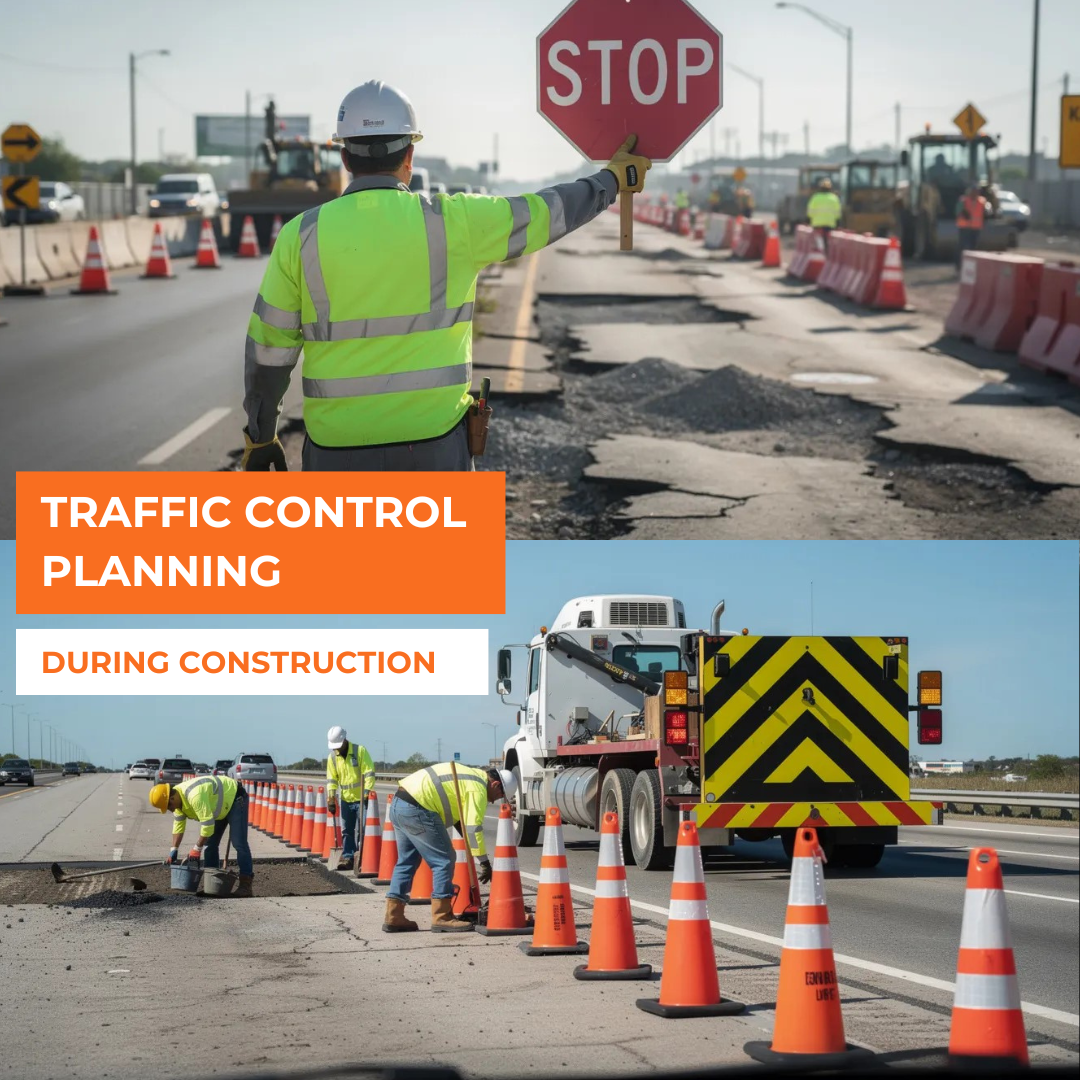
Overall, it combines trained flaggers or traffic control persons with engineered devices like signs, cones, barriers and portable signals, to implement construction-specific traffic rules. These rules are guided by a detailed traffic management plan that includes everything – from pedestrian detours to emergency vehicle access.
For construction companies, municipalities and utilities, understanding how all these bits fit together is the key to running safer, more successful projects. Of course, those who are planning for traffic control and those who are to become skilled traffic control persons need to receive appropriate safety training before starting.
Unlike safety courses – like CPO-approved Working at Heights training and Joint Health and Safety Committee certification or JHSC training, which is approved by the Ministry of Labour Immigration Training and Skills Development (MLITSD) and delivered by approved training providers like Act First Safety – traffic control persons and those who take Book 7 training do not undergo a formalized vetting process. Therefore, employers must ensure that they hire only those people who meet their requirements while satisfying regulatory compliance.
Prioritizing Road Users and the Public
Unlike most safety training and safety procedures that do not concern the general public, traffic planning does. This makes public safety the priority. The good news is that these safe practices typically ensure a safer environment for workers as well. However, you must always remember that:
Public safety is the first priority in every traffic control plan.
That said, before devising a plan, you should take a few common complications into account.
Considerations complicating traffic control plans
- Speed
- Number of lanes
- Pedestrians and cyclists
- Bridges
- Special events and film shoots
- Hills and curves
- Crowds
- Railway crossings
- Schools and hospitals
- Night-work
- Transit
- Emergency access
Compliance in Ontario: Regulations Concerning Traffic Control During Construction
In Ontario, Construction Regulations require that vehicular traffic that may be hazardous to workers on a public road should be controlled.
In addition, the employer must ensure that the person hired for directing vehicular traffic must be a competent worker, and not perform any other work while carrying out their duties as a traffic control person. Moreover, they must also be positioned in a manner to not put themselves at risk. See O.Reg. 145/00 s. 23 for specific regulatory information.
For preparation purposes in Ontario, planners are trained to use Book 7 Ontario Traffic Manual (OTM) Temporary Conditions. Published by the Ontario Ministry of Transportation, it outlines uniform requirements for traffic control in work zones during construction, maintenance, or utility operations on public highways. It is the go-to resource for safely planning traffic control in the province and outlines every possible scenario, regardless of speed, pattern, number of lanes, sidewalks, etc., that could be encountered on projects.
Construction Site Traffic Management Planning
A formal traffic management plan is a detailed document outlining how traffic will be managed during a construction project or event. A lot of municipalities and transportation agencies require a traffic management plan for lane closures, detours, and big projects – and for good reason. A good plan reduces confusion, prevents delays, and keeps everyone safer.
Here are key steps to having airtight traffic management strategy:
Start planning early to avoid delays
The planning process usually starts with an initial site visit and hazard assessment. Typical elements of a traffic management plan include advance warning signs, lane closure tapers, buffer zones, pedestrian detour routes, and provisions for emergency vehicle access.
Staging sequences should be a part of your flow too. They show how the work zone will change over time – maybe starting with a shoulder closure, then a full lane closure, and finally going back to normal. Nighttime work on freeways might need different signage and lighting than daytime work on a local street.
If you are working in a busy intersection, consider a multi-phase redevelopment to prevent jams. This plan should show how each phase affects traffic and pedestrian flow, where temporary signals will be needed, and how transit routes will be maintained.
Getting permits from the city engineering staff and ongoing communication will help you make sure your plan stays on track. Long-term curb lane closures for utility work need a similar level of planning, especially when local businesses are counting on customer access.
Overall, planning ahead will prevent surprises and keep projects on schedule.
Perform a post-project audit
After your project is done, review how things transpired – including what went well, what was unexpected, what went poorly and what can be improved. This analysis helps with future projects by avoiding the most challenging aspects learned from the previous job. This layering effect in learning and retrospection is where the ‘rubber meets the road’ and practical learning takes it to the next level.
Compliance Built on Training
Compliance with all the regulations is what underpins all professional traffic control operations. Without properly trained staff and following established standards, work zones can quickly become dangerous for workers and the public.
Mandatory training for traffic control workers covers all the bases, such as hazard identification, planning, communication, including radio communication and hand signals, equipment, including personal protective equipment (PPE), emergency response, and setting up signs and devices the right way.
Lastly, to keep everyone on the right track, you need to get some sort of refresher training every few years to make sure your knowledge stays up to date. Practical training goes hand-in-hand with classroom learning so that when you get out there, you're ready for real-world traffic.
Planning Your Next Project with a Professional Traffic Control Team
Becoming a traffic control pro and starting the project early reduces risk, saves money and time, and cuts down on delays. Too often, traffic management gets left till the last minute, which means permit delays, last-minute scrambles for equipment and PPE, and safety issues on site.
On the other hand, if you put together a solid traffic control plan and execute it with well-trained and competent workers, you look like a pro that can be trusted to do the job. You keep the public safe and show that your company is dead serious about getting the job done right.
Doing the right thing, both in terms of safety and efficiency, not only helps you get your project delivered smoothly, but also helps your company look good in the eyes of clients, regulators, and the local communities you are working in.
That said, if you are looking for code-compliant training programs for your construction team, we can help you. Act First Safety provides competent, CPO-approved courses, such as working at heights and JHSC training in Ontario. Our facility is conveniently located off the highway, offering exceptional connectivity and for all learners. Contact us to enroll in one of our courses and earn a valid certification that gets you hired.
FAQs
What is Book 7, and why is it important?
Book 7 refers to Ontario Traffic Manual Book 7, which outlines key requirements and guidelines concerning the implementation of temporary traffic control rules in the event of construction, maintenance, and utility work on public roads.
Does a construction site always need a traffic management plan?
No. Not all construction sites. Only those actively happening on public roads or sites that block partial or full access to certain public roads require a traffic management plan.
How does traffic control training improve construction site safety?
Training helps workers gain a deeper understanding of onsite hazards. It also educates them on proper communication methods and the use and setup of traffic control devices to prevent accidents. Finally, training teaches workers emergency response and how to safely interact with the public.