The Importance Of Inspecting Your Fall Protection Systems
Whether it’s a construction site, an industrial site, or any other site that requires you to work at heights, wearing proper fall protection systems is non-negotiable. Especially if you’re using scaffolds or ladders. However, your gear is only as effective as its condition.
Continuing to use equipment that is in poor shape is equivalent to sacrificing protection and exposing yourself to workplace hazards.
That is why in today’s blog, Act First Safety – a reputable worker safety course provider in Ontario, will walk you through the importance of fall protection system inspections and when to replace damaged equipment.
Fall Protection Systems: Built to Save Lives — Not Built to Last Forever
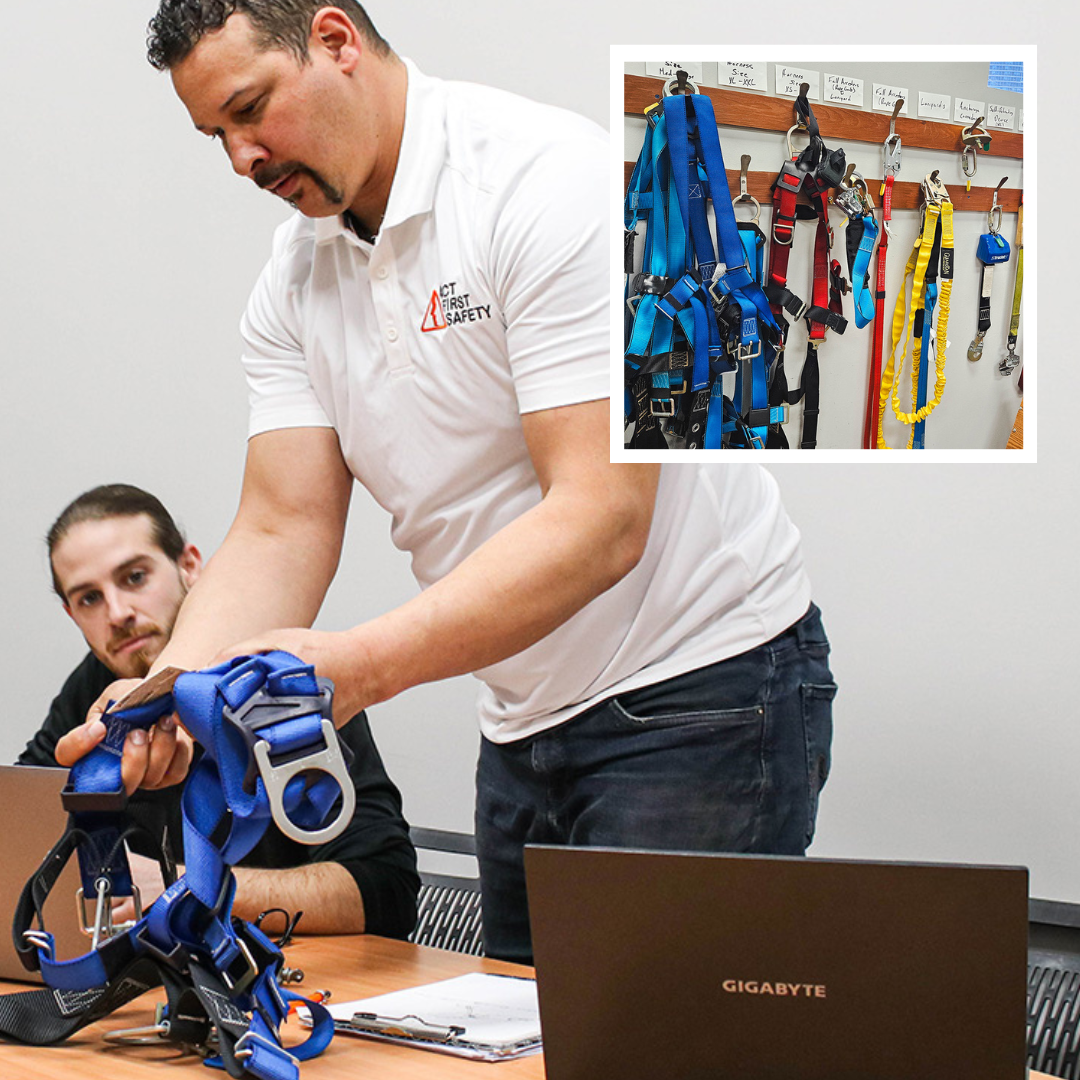
Every year, workers trust their lives to their fall protection system – whether it’s harnesses, lanyards, lifelines, or anchor points.
But these systems are not indestructible, and they certainly don’t last forever.
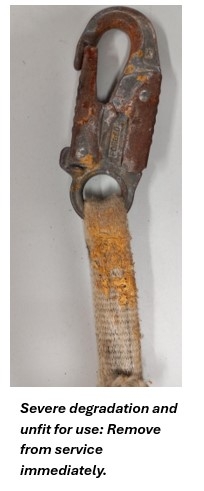
Created from man-made materials like nylon, polyester, elastic, plastic, and metal, they tend to degrade over time. In fact, they deteriorate more rapidly in harsh work environments or when exposed to damaging elements commonly found in construction and manufacturing.
Debris, chemicals, sharp objects found onsite, etc., can lead to any type of damage, including but not limited to:
- A single broken stitch
- A bent connector
- A deformed lanyard due to chemical exposure
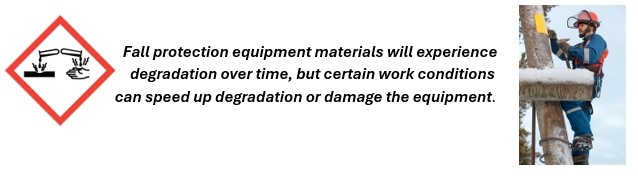
Detecting this damage as soon as possible can avert a disaster from happening. The sad truth is that despite clear legal requirements and industry standards, inspections are often rushed, skipped, or influenced by cost pressures.
As a worker, you may not recognize signs that indicate your equipment has reached the end of its life. On the flipside, supervisors may hesitate to retire compromised equipment. Plus, sometimes, risk tolerance might just quietly override good judgment.
All this combined can quietly create conditions for an accident. That’s why proper inspection before every use and once every year by a competent person is critical. Think of it not just as a best practice, but as a life-saving control measure and a legal obligation.
Let’s break down what effective inspection really means, who should be doing it, and why it matters more than most people realize. Because just working at heights training isn’t enough to stay safe. Using the right equipment is key.
Why Inspection Before Use Is Non-Negotiable
Safety management systems like COR and the CSA call for fall protection equipment inspections by a competent person who is not the user of the equipment at least once every year.
The Occupational Health and Safety Act (OHSA) also states that fall protection equipment must be inspected before each use to ensure it’s in good condition.
Additionally, if you get CPO-approved Working at Heights training, you will be taught to inspect protective gear during the course, too. Because gear that is not in good condition must be taken out of service until it is certified by a manufacturer to be safe for reuse. The truth is, most such equipment cannot be repaired, which makes inspection even more critical.
The Psychology of Risk: Why Defective Equipment Still Gets Used
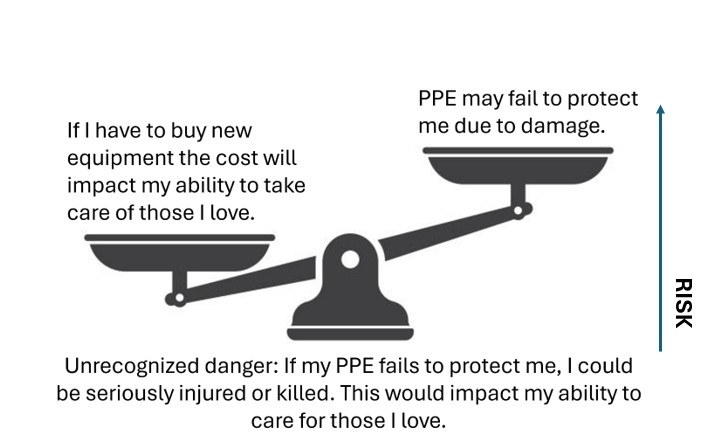
Whether it is cost pressure, personal risk tolerance, familiarity bias or workers trying to save money when required to invest in their own personal protective equipment (PPE), these factors can affect the likelihood of retiring defective equipment.
The solution? Annual inspections conducted by a competent person. Such inspections occur without biases, which makes them more effective and fair.
However, everyone has different risk tolerances. How much risk someone can accept depends on various factors like social values, potential consequences, and the individual at risk and their relation to the one making the decision.
For example, a worker may know the gear they’re using is defective, but they might still choose to use it because not doing so means they won’t be able to get the job done that day. Or because they are expected to pay out of their own pocket for that gear’s replacement. This can reduce perceived risk even though, realistically, it might be greater.
People will also perceive a lesser risk as more serious than a greater risk because they are more familiar with the lesser risk, thus making it feel more “real”.
It is a known and observable phenomenon that workplaces where workers are expected to pay for their own PPE will see higher rates of defective equipment being used by workers.
Risk: Interpretation Bias
While workers can buy their own PPE, the responsibility for ensuring its effectiveness and appropriateness still lies with the employer. They must ensure that all PPE used by the worker(s) is in good condition, appropriate for the work and hazards, and appropriate for the worker.
As per regulation, the following is mandatory:
[OHSA section 25. 1 (b.1) states that any personal protective clothing and equipment that is provided, worn, or used should offer a proper fit and be appropriate for the working conditions they are used in, meeting all relevant criteria, including any factors as may be prescribed within the act]
One of the best ways to ensure workers do not end up using damaged protective gear is to establish a Joint Health and Safety Committee within the workplace. Of course, JHSC training is compulsory for that.
Who Qualifies as a “Competent” Inspector?
While workers trained in working at heights will have knowledge and training on how to perform their daily inspections, having their gear regularly inspected by a competent person is highly recommended.
This competent person must be trained in working at heights as well and receive additional, more in-depth training compliant with CSA standard requirements, company policies, and manufacturer’s requirements and recommendations. Typically competent inspector training might be prescribed to ensure they stick to protocol.
While third-party inspection services can be valuable for specialized or highly technical equipment, having internal personnel trained in PPE and equipment inspection can significantly streamline this process, especially in environments where:
- Equipment is spread across multiple worksites, which makes it difficult to gather everything in one location for a third-party inspection
- Equipment is in continuous use, and stopping work to facilitate an external inspection can lead to downtime or disruption
Ideal candidates for training to be competent inspectors are:
- Supervisors
- Managers
- Health and safety representatives
- Internal safety specialists
Anyone can enroll in a relevant program to become a certified equipment inspector.
If It Isn’t Documented, It Didn’t Happen: Inspection Records
Inspections can seem like a pointless exercise if there is no record of them.
Keeping a written record of inspections can help you track your gear inventory and determine the average lifespan of each piece of equipment.
It may also help you identify if equipment is being consistently damaged by the same cause, thereby applying controls to increase its average life span and reduce the risk of deterioration. Written records should include the following information extracted from equipment labels:
- Manufacturer name
- Serial number
- Model number
- Date of manufacturer
- Date of first use (when known)
This information can also be used to quickly identify equipment during a manufacturer's recall.
There are two main methods of document control for equipment inspections:
- Physical (paper) copy
- Digital copy
In case your company maintains physical copies, each copy should still be scanned and kept in a digital format as a backup.
If you only keep digital copies of a large amount of equipment, you should try to include RFID tags in each piece of equipment so that it can be quickly scanned with a reader and registered in an equipment management program.
What Makes Equipment Fail an Inspection?
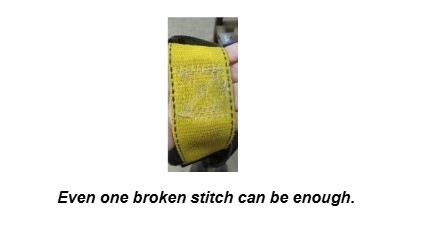
Many circumstances would lead to equipment failing an inspection. Even a single broken stitch can be a compromising factor, causing it to fail in the event of a fall arrest. The decision to take any gear out of service is based on the following factors:
- The equipment has been used in a fall arrest
- The fall arrest indicators have been activated on the equipment
- Manufacturer’s instructions indicate that an unacceptable condition had been met
- The inspector has doubts about the reliability of the equipment due to its condition or what it has been subjected to
- Company policy mandates that equipment be removed from service due to its age
Can equipment be repaired?
In general, fall protection equipment cannot be repaired and must be removed from service, permanently – especially if it fails an inspection.
There are, however, a few exceptions. For example, self-retracting devices and some anchorage systems can be repaired and recertified by the manufacturer if they offer such services.
Also, Davit systems' anchorage systems should be subjected to a non-destructive test and recertification by an engineer if they pass inspection and seem reusable.
There is, of course, still a chance that the damage to the equipment is too extensive to be repaired or recertified, in which case, the equipment concerned must be permanently taken out of service.
Decommissioning: Making Sure Defective Equipment Never Gets Used Again
Once equipment has reached the end of its service life, it must be disposed of to prevent accidental use. To stop reuse, it must be rendered unusable.
For example, a harness with a broken stitch can still be worn in error. Therefore, decommissioning it would require cutting it up so that it becomes unwearable.
Metal equipment may be a bit more challenging to destroy if you don’t have access to power tools. In this case, dismantle the equipment as best as possible and place it in a secure and inaccessible location until it can be sent out as scrap. This is critical in the prevention of incidents where someone takes defective equipment from the waste bin and uses it, thus putting themselves at risk of injury.
Final Thoughts: No Inspection, No Protection
Fall protection only works if it works. Inspection ensures it does.
Equipment inspections should be performed daily and as often as necessary. Annual inspections by a competent and trained inspector ensure that it remains in good condition and doesn’t pose a hazard to the worker using it. Employers must take the initiative to make sure these inspections are happening in the workplace to fulfill their responsibilities under the OHSA and the regulations.
Don’t have an inspector on your team yet? Act First Safety’s competent inspector training is the best of its kind available in Ontario. Available at our Scarborough facility located conveniently off Highway 401, you can combine this training with other safety courses we offer to make the most of your trip. Contact us to know more.
FAQs
Can fall protection equipment fail inspection even if it’s never been used in a fall?
Yes. Exposure to environmental factors, UV rays, and chemicals, along with improper storage, can damage gear, rendering it unusable.
What should employers do if a worker refuses to retire damaged fall arrest gear?
In such situations, employers must immediately remove damaged equipment and replace it with new gear to prevent code violations and serious injuries.
Does weather affect the lifespan of fall arrest equipment?
Yes. Weather conditions such as extreme temperatures, moisture, UV exposure, and freeze-thaw cycles can accelerate equipment wear and tear.