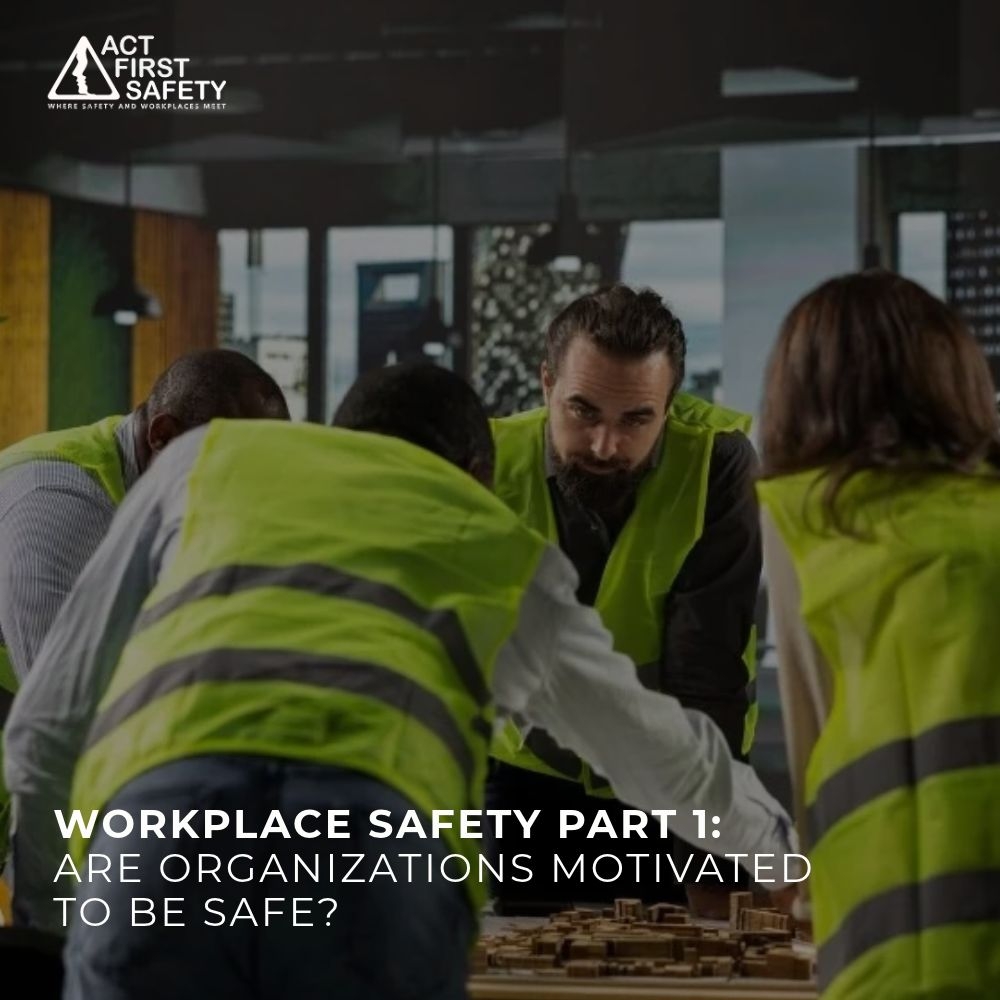
We all know how important worker training is for workplace safety and productivity. Even proper communication and due diligence have a role to play. However, not all employers place the same value on worker safety.
For some of them, ethical and moral reasoning is enough motivation to take necessary steps that ensure worker safety. For some others, the associated costs can be a deterrent.
Truth be told, even from a self-interested perspective, it would be in an employer’s best interest to protect their workers so they can continue contributing to the organization’s productivity. After all, injured workers might be slow, unable to complete all tasks like they once did, or may not be able to work for a period of time or anymore at all. All of these factors can increase costs to the company.
So instead of skimping out, Act First Safety, a safety course provider that has trained over 100,000 workers in Ontario, strongly recommends having strict on-site safety protocols in place. We will discuss why in Part 1 of our three-part blog series on this issue. Let’s begin.
Worker Turnover a Result of Incidents
Injuries don’t just impact the worker affected. They also influence worker turnover. This can be very expensive for organizations. More than they expect. The combined costs of re-training, reduced productivity from new hires, as well as time lost from the recruitment process can add up. Frankly, that should be a significant motivator for employers to help prevent injuries and illnesses. It is the most affordable way to avoid worker turnover, which is a significant inhibitor to employer profitability.
Injuries, illnesses, and fatalities contribute to worker turnover
How does that happen, you ask? Well, from the initial shock of an accident to the lifestyle changes needed for a worker to recover, every single aspect of a near-fatal incident or injury can affect worker turnover. Even the long-term effects that come with certain injuries can contribute to worker turnover.
But it's not just the person who got hurt who's affected. Colleagues, friends, everyone within the organization, and even the community can be adversely impacted by a single injury incident. This can translate into consequences like poor morale, difficulty recruiting, difficulty acquiring new projects, reduced revenue, losing good workers who fear for their safety, and poor corporate reputation. The potential fallout of a single accident is significant.
Fortunately, organizations can take a proactive approach to manage workplace hazards and reduce the expense associated with workers getting hurt in the first place.
There are plenty of ways to do this. From getting your Joint Health and Safety Committee to operate effectively and training competent supervisors to bringing in outside experts and improving safety programs – every step counts. Of course, ensuring workers are well equipped with the knowledge and skills required to work safely is a must too. Training programs such as working at heights training, aerial lift training, swing stage training, and basics like first-aid training can help in the prevention of the most common workplace injuries.
Consequences of Reactive Safety Measures
Unfortunately, many organizations continue to adopt a reactive approach to safety rather than taking proactive measures, thereby leaving their workers exposed to potential unaddressed hazards. In case an accident happens as a result, they are then forced to deal with the consequences of not properly ensuring the safety of their workers.
The consequences of callousness in the workplace have become more severe over the years. In Ontario, over a recent six-year period, fines for individuals have increased from $25,000 to $500,000 for injuries and accidents caused by a lack of proper safety measures. The same has increased from $500,000 to $2,000,000 for corporations. Both individuals and corporations may even be sentenced to prison depending on the severity of the accident. The law clearly states that:
Individuals susceptible to those fines include “any person” that does not comply with the Occupational Health and Safety Act and/or any applicable regulations is liable to a potential conviction.
In addition, in 2024, Ontario’s Ministry of Labour Immigration Training and Skills Development (MLITSD) introduced penalties designed for corporations with a second or subsequent offence(s) that result in the death of a worker or serious injury of one or more workers within a 2-year period. The minimum fine for this presently stands at $500,000.
The introduction of Bill C-45, commonly referred to as the Westray Bill, also marked a significant shift in enforcement by establishing criminal liability for organizations and individuals whose negligence results in serious workplace safety failures. The significance of Bill C-45 is the criminality of the charges. Those accused and found guilty receive jail sentences and a criminal record, which, like injuries and fatalities, also lasts forever.
Furthermore, Ontario’s Ministry of Labour, Immigration, Training and Skills Development (MLITSD) significant increase in fines and enforcement has influenced many employers to actively improve workplace safety overall.
While many employers have recognized the benefits of implementing safety measures proactively within their organization, some employers still continue to let safety lapse in their workplace. Unfortunately, workers have to suffer as a result, and we will show exactly how catastrophic that can be in the next two parts of this blog. They will explore the specific details of two cases (Steven Bell and New Mex Canada Inc) that have been influential in getting us to where we are today in Ontario. Stay tuned.
Conclusion
Worker safety might be an essential part of worker welfare, but its benefits are far-reaching. When properly implemented, worker safety measures can keep on-site productivity on track, ensure faster completion of assigned tasks, and generate more revenue by boosting the employer’s reputation in the market.
While there are many ways to improve on-site worker safety, providing them with relevant safety courses continues to be among the top three. Act First Safety has over two decades of experience in training Ontario workers. Our motto is simple: to ensure every worker gets home safe at the end of their shift. Register for our courses, which are available at our conveniently located training center off Highway 401. Contact us to enroll your crew.
FAQs
Does my company need a health and safety consultant?
Hiring outside experts helps organizations identify hazards, assess compliance, and build effective health and safety programs. A consultant provides essential guidance on legal requirements, hazard controls, inspections, policies, and training for new or existing frameworks.
How do I know if my company's health and safety program is compliant with Ontario legislation?
Organizations should consistently audit their workplace health and safety framework to verify compliance with current regulatory standards. Conducting thorough audits, reviewing existing protocols, inspecting job sites, and assessing hazards ensures compliance.
What health and safety training is required for my employees in Ontario?
The type of safety training workers need depends on the specific operational hazards, daily job duties, and statutory requirements of their site. Under Ontario regulations, employers must provide workers with awareness materials, targeted training, and WHMIS, machinery operation, and site-specific protocols.