Anchor Points For Suspended Work Platform Systems: Requirements, Inspections & Responsibilities
Suspended work platform systems (SWPS) are used for a variety of construction and maintenance tasks. In big cities, window washers suspended in bosun’s chairs are a familiar sight. As are workers on swing stages repairing balconies and building facades. However, what we see from the ground looking up is only part of the picture.
As pedestrians and spectators, we first notice the equipment being used, such as swing stages and bosun’s chair (sometimes referred to as boatswain’s chair). What we don’t see is the critical equipment on the roof that makes it possible to safely access the facades of our tallest buildings. We are talking about suspended access work platform systems.
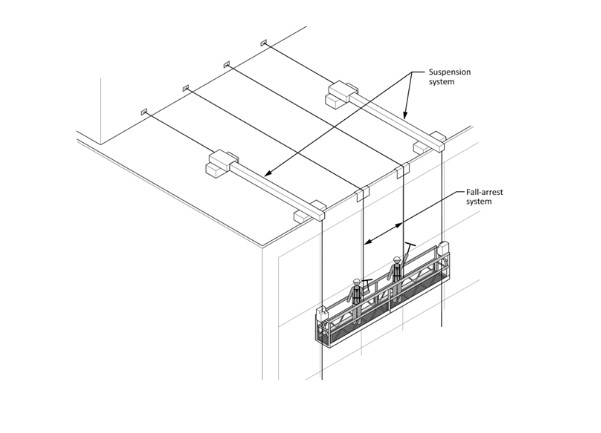
There are technically two systems at work here. While the suspension system supports the work platform mid-air, the fall arrest system works with it to protect workers from a potential fall. Though these systems are independent, they must work together to ensure the safety of the workers in the event of an equipment failure.
Suspension system accidents are not uncommon. Just recently, the rescue of a couple of window washers from a malfunctioning suspended platform made headlines in Montreal, Quebec in October 2026. That’s why being prepared and using equipment that’s ready for safe application is important. The same way maintaining MEWPs is important, for example.
Act First Safety, an Ontario-based CPO-approved worker training programs provider, has prepared an anchor point inspection and requirements guide for you so you can stay safe and avoid headlining accidents on the job.
What Does A Full Suspension & Fall Arrest System Look Like?
The fall arrest system consists of a full-body harness with a lanyard and a rope grab attached to a vertical lifeline, which is then connected to an anchor on the roof.
As for the suspension system of a swing stage, it consists of steel wire ropes that pass through the platform’s hoist motors and are suspended from roof-mounted outriggers or davit arms. These support systems position the platform away from the building façade, thus preventing damage to its exterior and allowing the platform to travel vertically along the building with as little friction as possible.
That said, the system’s outriggers or davit arms must be tied back to an anchor to prevent them from being pulled off the building. Otherwise, the force applied by the motors of the swing stage and gravity might start working against it, causing it to fall sharply instead of staying in place. This is the number one reason why anchor parts are such a critical part of suspension and fall arrest systems.
Roof Anchor Requirements Under Ontario Regulations - O.Reg 213/91 & Reg 859
Several regulatory documents list the proper use of and rules regarding anchor points, many of which reference each other, leading to what can be a confusing web of information that leaves you wondering what’s what. That is why we thought we would simplify it for you.
Fundamentally, anchor points for fall protection and suspended work platform systems (SWPS) must be designed and/or approved by an engineer following good engineering practices and be deemed adequate for their intended use.
Now let’s turn our attention to the significance of anchor points within regulations surrounding their use in the construction sector first.
The O. Reg. 213/91 Construction Projects lays clear instructions regarding the use of permanent anchors like those used in suspended work platform systems. It states that they must be installed according to the building code and be safe and practical to use.
On January 1, 2025, Ontario adopted an amended version of the National Building Code of Canada 2020, which requires that anchor systems for maintenance on the exterior of a building be provided where any portion of the roof is 8 metres (26 feet) or more above the adjacent ground level.
CSA Z271 – Setting The Standard For Anchor Point Design
Anchor points must be designed, installed and tested according to CSA Z271 “Design of Suspended Access Equipment”, and this is the very same standard whose requirements the entire suspended work platform system must meet. This building code also requires that the anchor be made of stainless steel, or steel that is hot-dip galvanized, or any other approved corrosion-resistant material.
This standard lays out the strength requirements for the anchorage as well. Anchorages used in suspended work platform systems must be designed to resist the application of 22.2kN (roughly 5000 lbs) of force in any direction without breaking or being pulled out. The anchors themselves must also be able to resist 11.1kN (roughly 2500 lbs) of force.
Here is a brief roundup of all the requirements regarding permanent anchors in suspended work platform systems as per the CSA Z271. Anchors should be:
- Safe and practical to use
- Provided where any portion of the roof is 8 metres or more above adjacent ground level
- Made of stainless or hot-dip galvanized steel, or any other corrosion-resistant material
- Able to withstand 22.2kN in any direction without breaking or being pulled out
- Be able to withstand 11.1kN without deforming
Roof Anchor Inspections: Roles & Responsibilities
As with any other piece of equipment used by workers, anchors must be regularly inspected to verify that they continue to meet the requirements set out in the documents mentioned above. The primary responsibility of conducting these inspections falls on a number of people and each should do their own part. For example, workers using the anchor must inspect it daily before starting their day’s shift.
Engineers or a person designated by them should test and inspect permanent anchor points before they are put into service. They must also create an instructional diagram of the roof showing:
- The location of different anchorage points
- Technical drawings of the anchors
- Instructions for maintenance and inspection
- Use of the anchorage systems
Onto the next person responsible for anchorages, according to O. Reg. 859 Window Cleaning, the owner of the building is responsible for posting the drawing or map of the roof identifying each of the anchorage points at the entrance to the roof. In addition, a copy must be provided to anyone who will be using the anchors for a suspended work platform system before the work begins.
The drawing shall include at least the following:
- A plan showing essential structural members
- Anchors and approach anchors
- Details about equipment and its installation
- The safe working loads and any use restrictions for equipment
- All relevant obstructions, structures, or other obstacles that impede operation or safe use of equipment
- The distance between anchors
- The location of all windows
- Anchor system details including capacity, size, and material used for every component
- Codes and standards used in the designing of the anchor systems
Other information that should be present includes:
- The date
- The name and seal of the engineer
- The address of the building
The building owner is responsible for maintaining the anchorage systems in accordance with applicable standards, regulations, and the engineer’s design instructions. The systems must be inspected annually by an engineer, and records of all inspections and maintenance activities must be maintained. These records must be made available to the constructor of any project where workers will be using a suspended work platform system.
Furthermore, employers of workers who will be using suspended work platform systems must ensure that the workers have the opportunity to review the contents of the roof drawing and inspection records before work begins.
In addition to the above, they must also provide workers with certified Working at Heights training and Suspended Access Equipment training along with aerial lift training (if it applies) to allow them to safely conduct their work.
Conclusion
Anchor points might seem like a small part of a suspended access and swing stage system, but they are pivotal to preventing accidents. Using CSA-compliant anchorages and inspecting them regularly is critical to worker safety. Canadian workers are no stranger to swing stage accidents, and following protocol might just be what keeps them safe. Along with proper training for the use of suspended access equipment, of course.
Act First Safety provides a range of relevant safety courses that Ontario workers can greatly benefit from, including working at heights training, swing stage training, and aerial lift training. Each of these trainings can be availed of at our off Highway 401 facility in Scarborough or on your work grounds. Contact us to learn about the course content of each of our training programs, along with its assessment methods, certification validity, fee structure, and more.
Resources:
MLITSD Guideline “Access and fall protection in window cleaning”: https://www.ontario.ca/page/access-and-fall-protection-window-cleaning#section-3
Reg. 859 Window Cleaning: https://www.ontario.ca/laws/regulation/900859
FAQs
What to do if there is no roof drawing posted at the roof access?
It is the responsibility of the building owner to post the roof drawing at the roof access point. If it is missing or is illegible, it must be replaced immediately. If there is no drawing to begin with in roofs that demand the placement of suspended work platform systems, a drawing has to be made, and anchorage systems may have to be installed.
Can workers share anchorage with suspended platform systems or another worker?
No. Anchorage for both fall protection and suspended platform systems must be independent.
What can be done if there is no anchorage on a structure capable of supporting a suspended work platform system?
If you wish to use a suspended work platform system and there is no anchorage that meets the requirements of the building code and CSA standard, then an engineer would have to be consulted for the commissioning of a proper anchorage system for the building.