Key Takeaways
- Forklifts come in different types, each designed for specific workplace environments and material-handling needs
- Forklift operators need equipment-specific training because operating one type of forklift does not automatically qualify someone to operate another type of forklift
Lift trucks have been used to move loads for over a hundred years, with sit-down counterbalance lift trucks being the first to show up on the scene. Frankly, the earliest models don’t look very different from their modern sit-down counterbalance versions. The only thing that is different is the addition of the overhead guards and load backrest safety features, which were added somewhere around the 1950s.
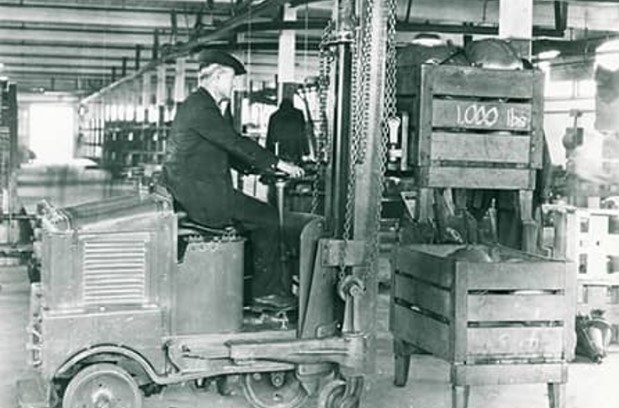
1920s Clark lift truck
Since then, forklifts have evolved to be able to handle loads of different shapes and sizes for all kinds of workplaces. And much like skid steer and their attachments, forklifts come with their own set of accessories that can expand their performance.
So let’s start today’s blog from Act First Safety, providers of all kinds of worker safety programs in Ontario, by discovering the major classifications of lift trucks.
Must-Know Lift Truck Classifications
The Industrial Truck Association classifies powered industrial trucks into 7 classes, six of which are considered lift trucks. These classifications are based on power source, tire type, and operating capabilities. These can be summarized as follows:
Class 1 – Electric motor rider trucks
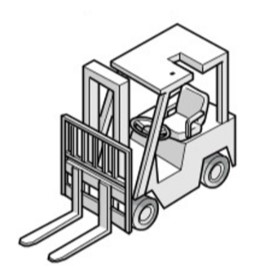
Power Source: Battery
- Usage: Sit-down or stand-up electric-powered forklifts that are used in warehousing and manufacturing.
- Key Advantage: No exhaust emissions, quiet operation, and no machine vibration - a very ergonomic choice.
Class 2 – Electric motor narrow aisle trucks
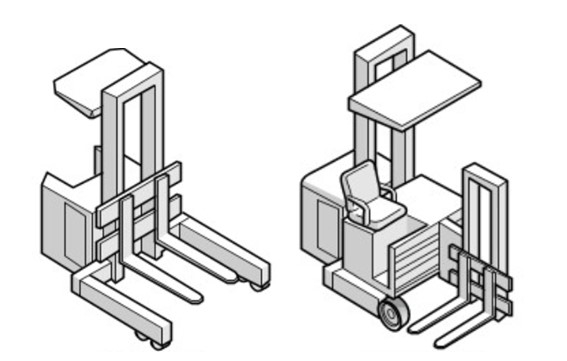
Power Source: Battery
- Usage: Stand-up and sit-down lift trucks designed to operate in narrow aisles, used exclusively in warehousing
- Key Advantage: These lift trucks have tight-turning radiuses that allow them to maneuver around narrow aisles with ease. Certain narrow-aisle lift trucks operate in aisles without the need to turn, allowing use in aisles as narrow as the width of the truck itself.
Class 3 – Electric motor hand trucks
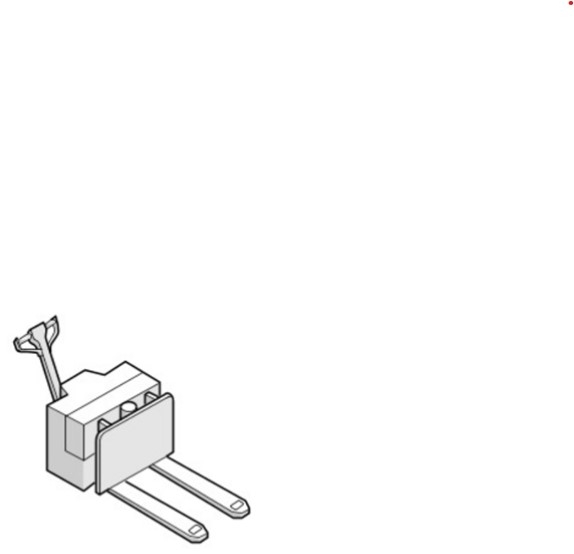
Power Source: Battery
- Usage: Loading and unloading truck trailers and moving loads from storage to retail space; can cover short distances only
- Key Advantage: Small, light and nimble, they can be operated in areas with narrow aisles and on retail floors.
Class 4 – Internal combustion engine rider trucks with cushion tires
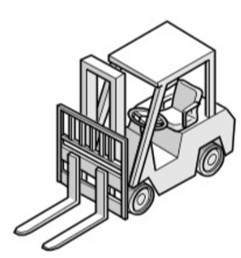
Power Source: Internal combustion engine – Propane, Gasoline, Diesel, Natural Gas
- Usage: Manufacturing. These lift trucks are for strictly indoor use on concrete floors. Due to exhaust emissions, they must be used in spaces with adequate ventilation.
- Key Advantage: Plenty powerful for their size with lower repair costs compared to electric lift trucks.
Class 5 – Internal combustion engine rider trucks with pneumatic tires
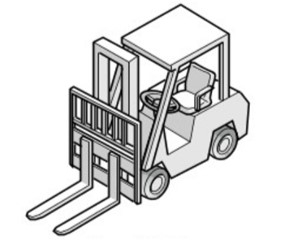
Power Source: Internal combustion engine – Propane, Gasoline, Diesel, Natural Gas
- Usage: Intended for outdoor use on compact ground
- Key Advantage: Large range in lift capacities available; these lift trucks are used to lift some of the heaviest loads.
Class 7 – Rough-terrain lift trucks
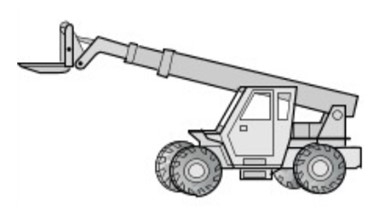
Power Source: Battery or internal combustion engine – gasoline or diesel
- Usage: A common sight on construction sites, mine sites and farms where rough terrain is common
- Key Advantage: Can navigate uneven terrain and looser ground than other classes; these lift trucks often have 4-wheel drive. Telehandlers (variable reach ) are equipped with crane-like booms and typically have multiple steering moves to manoeuvre in areas with limited clearance.
Diversity Meets Variety of Workplace Needs
This diversity in lift trucks has led them to become one of the most common material handling equipment in the workplace. Although they are an indispensable tool in the economy now, they can still pose serious health and safety hazards if workers operating them are not properly trained.
Not a one-size-fits-all training
When it comes to forklift training, you can’t just take any lift truck training course on any kind of lift truck. Driving any stand-up lift truck is a completely different experience from your typical sit-down lift truck.
For instance, someone with years of experience operating a Class 5 forklift may have zero experience operating a Class 2 lift truck. While an experienced Class 5 operator may have extensive knowledge of the fundamentals of lift truck operation, the manner in which the lift truck itself is operated is completely different from other equipment classes like Class 2. This means when it comes to competency and safe operation, a Class 5 lift truck operator would be considered a novice when switching to Class 2 equipment operation.
Workplaces cannot introduce new classes of lift trucks and simply expect operators to “figure it out.” Doing so, can lead to serious injuries, property damage and even fatalities. When introducing a new class of forklift to the workplace, employers must ensure that operator training is refreshed or upgraded to include the safe operation of the new equipment.
Forklift operator training must include practical training as well as ample time devoted to learning the mechanism of the machine in question, including its handling controls. Workers who may typically be very fast with material handling on one type of forklift may operate another type of forklift more slowly simply because of the handling differences.
Get Certified With Act First Safety
At Act First Safety, we deliver our lift truck training courses in accordance with the requirements of the CSA standard B335 Safety Standard for Lift Trucks for both new and experienced drivers to ensure that all workers gain or maintain knowledge of safe lift truck operation in Ontario.
Training for any class of forklift is delivered at the client’s facility using the actual equipment the workers will be using in their job. It includes a practical evaluation on the lift truck to ensure the operator can demonstrate their ability to safely operate the lift truck before being certified.
Course length depends on the number of participants and the number of lift truck classes covered as this affects the total amount of practical evaluations that need to be fulfilled for successful completion of the course. Contact us to learn more.
FAQs
Can lift truck training be delivered online?
While online lift truck training exists, we recommend in-person instruction for new operators. Act First Safety’s online course excludes a practical component unless specifically added.
Employers must arrange hands-on instruction, either internally or through a qualified trainer, to demonstrate controls and evaluate worker capability. They must also ensure internal instructors are competent in legal requirements, instruction, and oversight.
I hired a worker with a lift truck certification that doesn’t list what class of lift truck the certification is for. What does that mean?
This typically indicates generic training, often online courses covering only sit-down counterbalance theory, without class-specific instruction. Employers must evaluate if this satisfies their internal requirements.
New hires should receive site-specific orientation and perform a practical demonstration supervised by a competent evaluator. Since online certifications lack practical training, certified workers may still have no actual operating experience and may require additional certification.
Class 1, 4, and 5 seem very similar in operation. Can training for one be transferable between them?
Yes and no. While stability principles and control layouts are nearly identical across Class 1, 4, and 5 lift trucks, their operation and handling differ. Class 4 trucks use cushion tires for smooth surfaces, whereas Class 5 and some Class 1 trucks feature pneumatic tires for outdoor ground like compact dirt. Pneumatic tires also create more bounce over bumps, requiring extra caution to prevent spilled loads.
Additionally, Class 1 trucks run on electric power, while Class 4 and 5 use internal combustion engines. Electric motors accelerate faster, which can cause unfamiliar operators to speed and increase accident risks. Therefore, workers should always be allowed time to adjust to a new truck’s handling.