Many businesses in construction, landscaping, mining, and other industries rely on heavy equipment like lift trucks, telehandlers, augers, crushers, and excavators for daily operations.
But did you know the humble skid steer can do all of its jobs if you give it a chance?
With the right attachments, this small yet powerful machine can duplicate the functions of multiple large pieces of equipment! That is what makes the skid steer such a valuable addition in the day-to-day performance of average Ontario worksites. In fact, they can be particularly useful for smaller employers as well because of how versatile they are.
With the right accessories, you not only enhance the overall performance and functionality of your machine, but you also get to expand the scope of services you can offer. A complete win-win!
That is why in today’s blog, Act First Safety – safety training providers for Ontario crews and workers – will explore why investing in specific skid steer attachments increases the versatility and value of the machine. We will also consider the effect these attachments have on safety and the importance of safety training.
Everything You Need To Know About Skid Steers & Their Attachments
Named after the motion they make when they turn, skid steers are capable of doing a lot more than you can imagine. Let us show what we mean!
Understanding the operating capacities and load capacities of skid steers
Skid steers are classified by frame size. Their rated operating capacity is defined as 50% of their tipping load, which is required to maintain stability.
However, to truly understand a skid steer’s load and operating capacities, you need professional skid steer training – just like you need forklift training for operating forklifts. During training, you will receive an actual demonstration of the various mechanisms of a skid steer, including its center of gravity, the weight of the weights and movements of particular attachments, and how to operate the machine safely.
In fact, if you have had prior forklift experience, transitioning to a skid steer with the help of additional training will seem easy and natural.
Maximizing skid steer versatility through attachments
Now let’s come to the topic we have been hyping since the introduction – skid steer attachments that can be immensely valuable if you use them right.
Below is a list of skid steer add-ons that can help you handle a variety of situations and tasks. The major advantage is that most of these can be added and removed quickly to transform your working experience and specialization.
For now, check out the list to get a fair idea of the things you can do with your skid steer. We will dive deeper into some of the more common attachments in later sections.
| Backhoe | Dumping Hopper |
| Hydraulic Breaker | Ripper |
| Pallet Fork | Tiller |
| Broom | Grapple |
| Sweeper | Tilt |
| Auger | Roller |
| Mower | Blade for snow, gravel, dirt, debris etc. |
| Snow Blower | Saw |
| Stump Grinder | Cement Mixer |
| Rake/Spade | Wood Chipper |
| Trencher |
As you can imagine, different terminologies exist for each of them, whether informal or technical, across the market.
Think about what is technically categorized as mobile elevating work platforms. They are commonly referred to as scissor lifts, aerial lifts, genie, boom, skyjack, etc., in day-to-day operations. Likewise, each workforce and workplace will use its own lingo when it comes to skid steers and attachments. However, the basics will largely be the ones we have covered above.
The most common skid steer attachments and their key applications
While we have shared a comprehensive list of skid steer add-ons, let’s now focus on the ones most commonly used.
These fundamental attachments are generally used in a variety of sectors such as construction, landscaping, waste management, facility management, agriculture, mining, and others:
- General-purpose bucket: Perfect for digging, scooping, and loading loose materials
- 4-in-1 bucket: Combines dozing, clamping, grading, and loading capabilities in one attachment
- Pallet forks: Essential for handling palletized cargo and materials parallel to forklift truck operations
If you are starting out, we definitely recommend getting the above attachments. They will let you get more work done on your site without renting or purchasing any additional expensive equipment. However, if your line of work demands specialized tools, you should consider the options we have discussed below. They are all industry-specific.
Earthmoving and Site Work
If earthmoving and site work are your forte, you need a set of skid steer attachments that can simplify onsite tasks. These magnificent movers can help you get work done in a jiffy:
- Augers: Drill holes for fence posts, piers, and sign installations
- Trenchers: Cut utility trenches for electrical, plumbing, and irrigation lines
- Backhoe arms: Add excavator-style digging capability
- Landscape rakes: Prepare soil for seeding and final grading
- Soil conditioners: Break up compacted ground for landscaping projects
Landscaping and Grounds Maintenance
Skid steer’s grounds maintenance accessories can help you make the most of Canada’s short spring and summer. Get all the help you can from:
- Stump grinders: Remove tree stumps below grade
- Wood chippers: Process brush and branches into mulch
- Brush cutters: Clear overgrown vegetation
- Tree spades: Transplant trees with root balls intact
- Sod layers: Install turf efficiently on large properties
Winter and Municipal Service
Whether you use them at the ‘start of the day’ or the ‘end of the day’, these skid steer add-ons can be critically important in the maintenance of a safe workplace:
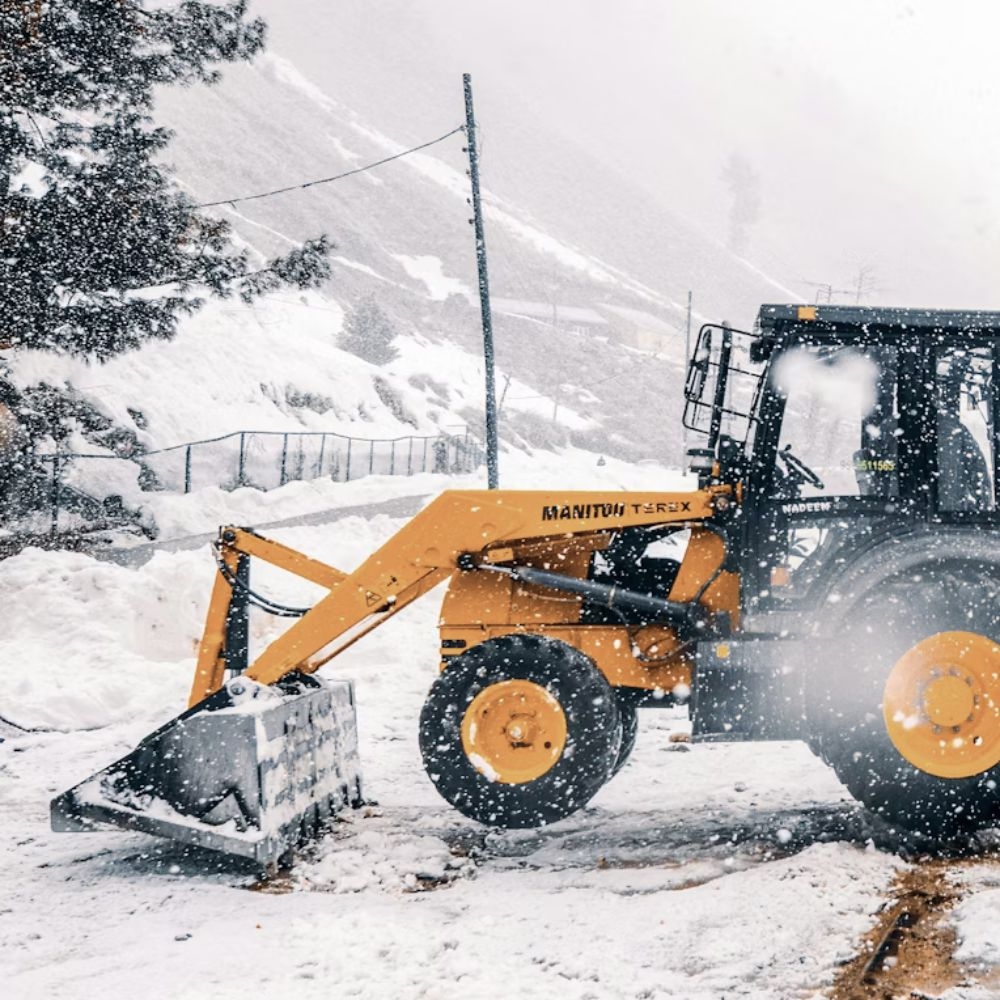
- Snow buckets: Clear parking lots and loading areas
- Snow blowers: Handle heavy snowfall with high-throw capacity
- Angle brooms: Sweep light snow and debris from surfaces
- Salt/sand spreaders: Apply de-icing materials to roadways and walkways
Construction and Industrial
When it comes to construction and industrial maintenance, you can pick and choose from the additional skid steer taskmasters we have listed below:
- Hydraulic breakers: Demolish concrete and asphalt
- Concrete saws: Cut precise lines in hardscape
- Cold planers: Mill asphalt surfaces (requires high-flow hydraulics)
- Grapple buckets: Handle demolition debris, logs, and irregular materials
- Industrial sweepers: Clean jobsites and warehouse floors
No matter which industry you belong to or which accessories you use, one thing is for sure – the increased versatility of a skid steer will definitely bring immeasurable value to your operations. As long as your crew is properly equipped with the knowledge and skills needed to handle them, though. That is why strongly emphasize getting trained even if you have received prior certification in aerial platform training.
The effect of skid steer attachments on safety
Knowing and understanding the use, maintenance, and operation of each skid steer attachment is important in maintaining site safety. Let’s discuss the impact these add-ons can have on site safety and how you can prevent any related accidents.
Machine stability and tip-over risk
Before selecting an attachment, make sure it is compatible with the skid steer make and model you have.
Since attachments change the weight, balance, and center of gravity of the machine, any operators you hire must receive skid steer training to reduce the risk of tip-overs and preserve the machine’s stability.
The heavier or longer the attachments are, the greater the risk of a tip-over – especially if you are working on sloping or uneven ground. That is why it is critical to note that machine stability is reduced when loads are raised or carried forward.
Our suggestion to combat this problem? Always use attachments within the manufacturer’s rated capacity! That should prevent tip-overs.
Visibility and operator awareness
The risk of being struck or crushed is always real when you are working with heavy machines like skid steers. Some attachments can potentially block the operator’s view of the work area or create blind spots near ground level, thus making collision a real threat. So when using such attachments, make sure you have a spotter guiding you on the ground when needed.
Pinch, crush, and entanglement hazards
Attachments with moving or rotating parts like augers, grinders, and brush cutters can be hazardous if misused. Watch for pinch and crush points when handling and operating such attachments.
Also, don’t forget to wear clothing that does not get entangled in the equipment when operating. It can be very helpful in preventing accidents. Lastly, lock out the equipment as and when necessary. Remember, lock out should only be disengaged by a supervisor for repair or when the problem has been remedied. Otherwise, do not remove any guarding!
Hydraulic system hazards
Some attachments rely on high-pressure hydraulics, which can cause injuries if hoses fail or lead to sudden movement with the release of hydraulic energy. Scheduling pre-use inspections of such equipment and the correct connection of these attachments is critical for safe operation.
Attachment compatibility and installation
Ensuring the correct use and installation of compatible attachments only can prevent machine damage and failure. We strongly suggest using only manufacturer-approved or properly rated attachments to maintain safety.
Operator training and familiarity
Each attachment changes how the skid steer moves and functions. To adapt to these changes, operators must be trained to understand attachment-specific hazards and to adjust operating techniques accordingly. Lack of training is a major contributor to attachment-related incidents, which is why it is unskippable.
Worksite conditions
Certain skid steer attachments can be very risky when used near overhead power lines, in confined spaces, or on soft or unstable surfaces. Jobsite hazard assessments should be conducted before using such attachments.
Conclusion: Attach with care and caution
Regardless of the industry you are working in – construction, landscaping, recycling, road work, or demolition – acquiring the best attachments is not enough. Maintaining safety and efficiency while using them is critical.
While skid steers and their attachments expand operations, they also introduce new hazards that demand proper management. Safety training is an essential part of this.
Act First Safety provides the most comprehensive, code-compliant, and engaging training programs in Ontario. Contact us to explore our range of worker-safety-oriented courses that you can book for your crew.
FAQs
Do skid steer attachments require separate operator training?
While Ontario regulations demand worker competency, there is no specific mandate for training in individual attachments. We recommend training your operators on attachment-specific hazards to maintain safety.
Can the wrong attachment void a skid steer’s warranty?
Yes. Using incompatible accessories can damage the machine’s hydraulic systems, thus overloading its components and voiding the warranty.
Are skid steer attachments interchangeable between brands?
Not necessarily. While a few attachments are universal, certain others require compatibility with the skid steer’s specific hydraulic flow requirements, mounting systems, and weight limits.