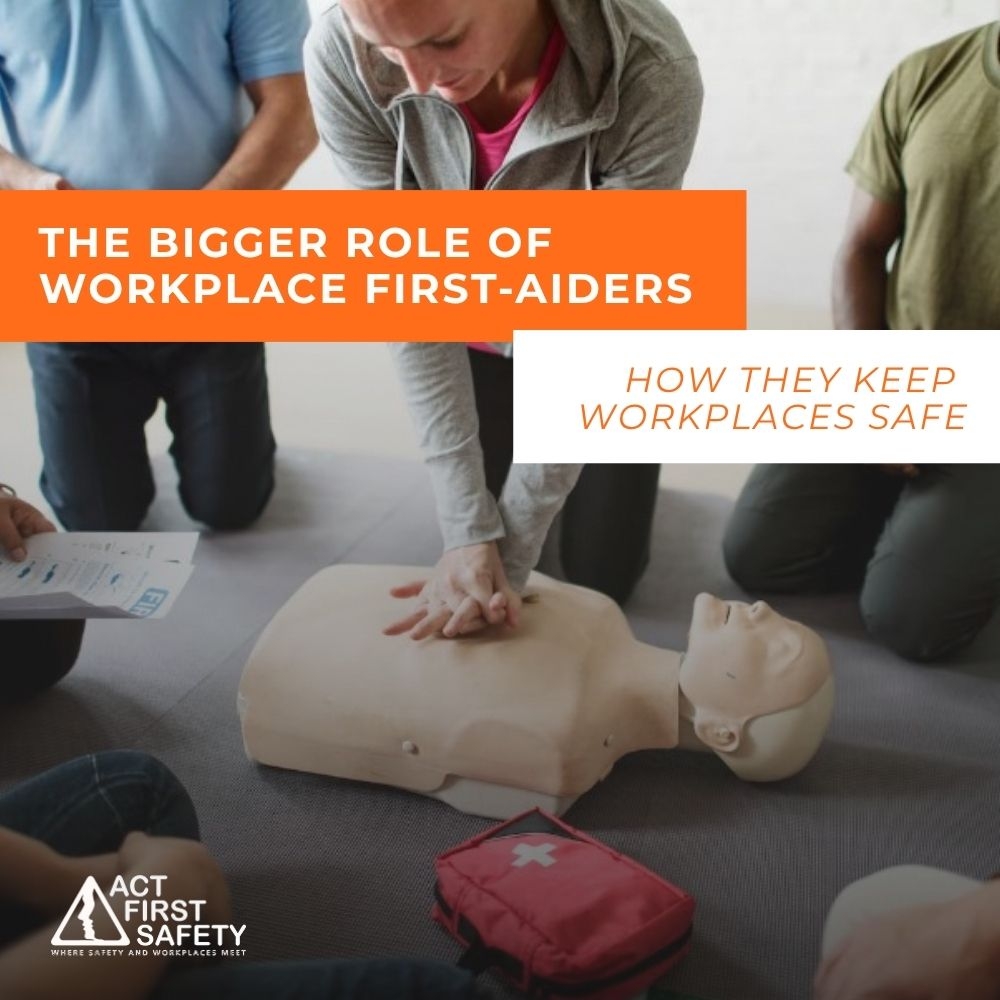
First-aiders play a vital role within any health and safety system at work. They not only provide immediate care for people who get hurt, but they also help get workplaces ready for emergencies and share tips on how to avoid future injuries. But how effective they are depends a lot on how well their training fits with the specific hazards, procedures, and safety tasks that are unique to that workplace.
Take for example, jobs involving working at heights and aerial lift use. These are inherently high-risk jobs, and having a first-aider on site can make a dramatic difference to workplace safety, provided the present first-aider has been trained for it.
Fortunately, Ontario regulation seems to be moving in the right direction in this regard. The province’s current regulations align with the national standard, CSA Z1210:24 - First Aid Training For The Workplace — Curriculum and Quality Management For Training Agencies. This makes the connection between first aid training and workplace health and safety even clearer than before.
However, understanding where first aiders fit into a health and safety system like an Occupational Health and Safety Management System (OHSMS) explains why safety principles are critical when training them and how that knowledge can help create safer workplaces that are better coordinated.
That is why today, Act First Safety, providers of regulation-compliant safety training courses, have prepared a guide for you on the role of first-aiders in the workplace. They are more important than you think.
Why Ontario’s Updated First Aid Training Includes Occupational Health and Safety Principles
On June 22, 2026, the Workplace Safety and Insurance Board (WSIB) launched a modernized First Aid Program to enhance workplace safety. This updated program aligns training with national standards, improves the quality of training and expands access to approved training providers (Workplace Safety and Insurance Board [WSIB], 2026).
As for the standard responsible, the CSA Z1210:24 sets the minimum requirements for workplace first aid training. It includes updated content of the course and how training companies are to manage course quality. There are a few changes from the 2017 version in the 2024 edition, including alterations to the design and delivery of the course, certificate validity periods, and the recertification process (CSA Group, 2024).
One important feature of the updated program is that occupational health and safety principles are included by default in first aid training. That means new training courses now automatically cover topics such as recognizing hazards, assessing risks, using control measures, understanding safety data sheets, knowing relevant laws, and understanding the role of a first aider within a workplace safety system.
WHMIS training complements the learning achieved in the new first aid training curriculum and familiarizes first-aiders with the contents of safety data sheets. So it is best for first-aiders to take them together or, at the very least, consecutively.
The updated program makes it easier to understand how emergency care fits into workplace safety. It encourages first-aiders to be aware of what is happening during an incident, to understand their responsibilities, and to feel comfortable communicating any concerns.
How First Aiders Support an OHSMS
An Occupational Health and Safety Management System includes policies, responsibilities, hazard assessments, emergency plans, and ongoing improvements. First-aiders play an important role in this system before, during, and after any incident. Let us explain what first-aiders are required to do in each scenario.
Before an incident, first aiders help with preparedness by knowing where the equipment is, who is trained to help facilitate emergency response, and how emergency procedures work. Taking time to review workplace hazards and practicing emergency scenarios makes it easier to support what is learned in training and apply those skills to real-life workplace situations.
During an incident, first-aiders need to understand workplace hazards and their potentially harmful consequences. This allows them to provide appropriate care safely and efficiently, given the situation. Their duties also include providing immediate care within the scope of their training and communicating with the injured person and emergency responders.
For example, if a worker is injured by a chemical, the first-aider needs to consider whether that chemical could also harm them. Having sound WHMIS knowledge along with a thorough understanding of the product’s safety data sheet helps first-aiders understand the hazards present on site, the protective measures needed to counteract them, and the appropriate first-aid response in emergency situations.
After an incident happens, reporting it accurately helps organizations notice recurring hazards and gaps in control measures. For example, if workers injure themselves while packaging, it may prompt the employer to review the packing equipment, the work method, or the protective gear being used to make changes. Tracking incident reports impacts these decisions and are very important in an OHSMS continuous improvement program. Reported concerns need to lead to appropriate action.
First-aiders can provide the kind of factual observations from their own experience that would be useful, such as delays in getting help, difficulty in finding the right supplies, challenges in communication, etc. The relevant workplace parties can then use this information to review their processes and make improvements. This supports the Plan, Do, Check, Act approach to continuous improvement found in any OHSMS system. (CCOHS, 2026).
However, the presence of first-aiders does not undercut the role onsite supervisors play. Management still needs to ensure that individuals with competent supervisor training are present on the premises at all times. That is one of the first lines of defence any workplace can employ against injuries and fatalities.
Similarly, the importance of having worker representatives who have received formal JHSC training in the case of large organizations is also non-negotiable. These representatives are instrumental in voicing worker safety concerns while ensuring the implementation of new safety rules and initiatives based on the reports of first-aiders and other emergency responders.
Making First Aid an Integral Part of Workplace Safety
Integrating OHSMS principles into first aid training can improve emergency preparedness. It can also help first-aiders understand the roles and responsibilities of involved workplace parties, and how the same incidents can be prevented from recurring.
Most importantly, it helps first-aiders see how important their role is. They are frontline warriors in case of emergencies and play an integral role in workplace safety. Moreover, it is a good reminder that effective first aid depends on how well responsible people work together.
However, even fully trained first-aiders can be powerless without employer support. They need access to the equipment concerned along with relevant hazard information, to devise appropriate safety strategies. They should also be familiarized with the appropriate procedures, have the opportunity to practice their skills in mock scenarios, and be given the opportunity to maintain their first aid training.
Supporting the first-aider within the OHSMS allows the individual’s knowledge and skills to become part of a coordinated response and a continuous process of prevention.
Conclusion
Most workplaces can be hazardous in their own ways. While providing workers with appropriate training to deal with the hazards of their workplace, such as fall protection training or hoisting and rigging training, is important, it is not enough. Workers also need first aid in case of emergencies, and that’s where properly trained first-aiders step in. They play just as crucial a role as anybody else in preserving workplace safety.
Planning to train your crew to increase the safety standards of your workplace? Act First Safety is the go-to certified safety training provider for Ontario workers spread across a wide range of industries such as construction, healthcare, engineering, and more. Contact us to learn how we disseminate our CPO-approved training courses and the topics they cover.
References
Canadian Centre for Occupational Health and Safety. (2026, February 11). Occupational health and safety management systems. https://www.ccohs.ca/oshanswers/hsprograms/occupational-health-and-safety-management-systems.html
CSA Group. (2024). First aid training for the workplace: Curriculum and quality management for training agencies (CSA Z1210:24). https://www.csagroup.org/store/product/CSA_Z1210:24/
Workplace Safety and Insurance Board. (2026, June 22). WSIB launches modernized first aid program to enhance workplace safety across Ontario. https://www.wsib.ca/en/news-release/wsib-launches-modernized-first-aid-program-enhance-workplace-safety-across-ontario
FAQs
1. What's CSA Z1210:24 and why does it matter for workplace first aid training?
CSA Z1210:24 is a national standard in Canada that sets out what first aid training should cover and how training agencies should manage the quality of their programs. It basically helps ensure that first aid training is solid and consistent so that it prepares first-aiders for the specific challenges they'll face in their workplace.
2. How does Ontario's updated First Aid Program sync with health and safety principles?
Ontario's revamped First Aid Program is based on CSA Z1210:24 and puts health and safety concepts right at the heart of the training. This includes things like identifying potential hazards, understanding the risks and learning how to prevent them and what to do if an accident does happen.
3. Why does first aid training need to be tailored to the specific hazards of a workplace?
Well, every workplace is different and has its own unique risks - whether that's chemicals, heavy machinery, slippery floors or strains from heavy lifting. It's crucial that first aiders get trained on the very things they might encounter and know how to handle them without putting themselves or others at risk.
4. What if a first-aider spots a potential hazard at work? What do they do?
If a first aider notices a hazard, they should follow the normal procedure for reporting it and right speak about it to the right person - whether that's a supervisor or someone in the health and safety team. If there's an immediate danger, though, they need to think about their own safety and the safety of others first. This entails following emergency safety procedures and avoiding getting too close to the hazard.
5. How does WHMIS knowledge help workplace first-aiders respond to chemical incidents?
Knowing WHMIS ensures first aiders have a good grasp of chemical hazards and are aware of the right safety precautions to take. A safety data sheet can further help them understand potential hazards, the protective gear needed to handle them, and what to do if something goes wrong.
6. How can incident reports help improve an OHSMS?
Incident reports help organizations identify patterns, recurring hazards, and weaknesses in existing controls or emergency procedures. Reviewing this information allows employers to take corrective action and evaluate whether changes are actually making a difference to workplace safety.
7. How can employers support workplace first-aiders?
Employers can support first-aiders by providing the right equipment and giving them access to the hazard information they need. They must also familiarize them with the clear emergency procedures followed at the workplace and provide them with the opportunity to practice responding to emergencies. They must also provide them with appropriate training whenever necessary.
8. Why is it so important to involve first-aiders in emergency planning?
First-aiders often have a feel for what works and what doesn't in an emergency situation. They know pretty well what restrictions you're up against when it comes to supplies, communication and response times and what potential hazards you might need to watch out for. If you include their insights in your emergency planning, you can spot gaps in your response procedures and make them more effective.
9. How often should workplace first-aiders be reviewing their training and emergency procedures?
First-aiders need to keep their certification up to date as per provincial regulations (in Ontario, first aid certification must be refreshed every 3 years), and review the workplace emergency procedures every time they change. It's also a good idea for employers to make time for practical simulations, refresher training and reviews after an incident or when a new hazard is identified.