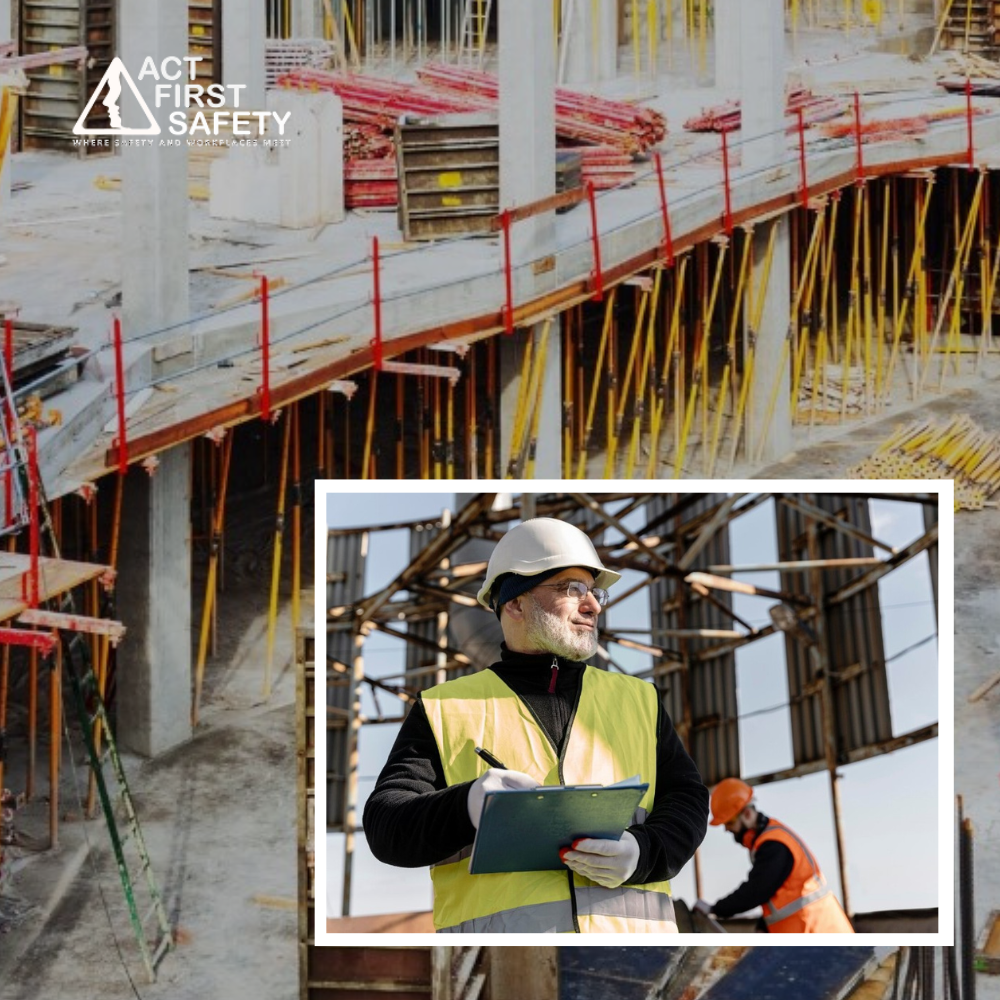
Having a good supervisor on your team is not only a viable means to boost onsite productivity – it is the key to a successful business. Competent supervisors can help the management control labour costs and quality by ensuring everyone does their job. This, in turn, can help your company generate the revenue it needs to bid successfully on additional projects, create more jobs, and hire more people. It’s a profitable loop!
However, you must note that under the Occupational Health & Safety Act (OHSA), a good supervisor means something very different. Specifically, employers are required to appoint competent supervisors who possess the necessary knowledge, training, and experience to:
- Organize the work and ascertain its performance
- Are familiar with the legislation that applies to the work at hand; and
- Understand the potential or actual health and safety hazards in the workplace.
A good supervisor can also prevent on-site accidents. While business owners are well-intended in promoting employees within the ranks to supervisory positions, there are often gaps in the competency requirements as required by law.
That’s where additional training in the form of competent supervisor training comes in. It can help you meet the requirements of the law and have more skilled supervisors on your team. Keeping that in mind, in today’s blog, Act First Safety – the most reputable safety training provider in Ontario, will walk you through just how critical competent supervisors are to improving onsite productivity.
Understanding The Importance of Competent Supervisors
A good supervisor can carry out their duties effectively only when the management and workers extend their support. They can’t do this task alone. For example, a journeyman who wants to become a supervisor should actively seek means to learn and prepare so they are ready when the opportunity arises. In a way, you are making your own luck.
Success means making your own luck and
being prepared for everything.
Training starts with technical skills and job knowledge. While employers typically pick from the most knowledgeable workers to rise within their organization, only they can create an atmosphere where such learning and growth is possible. Managers can ensure opportunities for skill development and job expectations are available by:
- Supporting formal professional development channels
- Explaining and demonstrating key technical skills
- Allowing the employee to apply their acquired skills on the job
- Following up to determine whether the job is being done correctly or retrain as needed
- Setting up additional mentoring opportunities to develop supervisory skills
Of course, technical training, such as competent supervisor training, should be an ongoing endeavor. It’s needed to stay relevant in a rapidly changing market where technological advancements happen every few years. That means simply providing CPO-approved working at heights training, for example, is not enough to ensure your chosen foreman will be a good leader after a couple of years of experience. They need relevant and proper training to qualify.
In fact, to achieve the highest standards of competency, learning should continually be reinforced by employers – and even supervisors. Learning should never stop, especially at the leadership level.
Skills Shaping Great Supervisors
Across many industries, titles such as Foreman, Lead Hand, Superintendent, Manager, and Supervisor are used for those with authority over workers. Individuals in these supervisory roles must develop the skills necessary to perform their responsibilities effectively. This includes:
- Planning, leading, organizing, and controlling the workplace
- Dealing effectively with people
- Communicating with others
- Motivating oneself and others
- Encouraging and ensuring teamwork
- Appraising performance
- Administering discipline
Apart from the above acquired skills, supervisors must also possess key attributes such as motivation, initiative, morality, and similar inherent qualities that aren’t taught in a classroom. Traits like these come in handy during times of stress at work.
A Supervisor’s Knowledge Builds a Safer Workplace
Supervisors must be proficient in a number of areas if they are to lead effectively. The first is a thorough mastery of all job skills, including the equipment and tools used by your teams. If you want to be the kind of supervisor everyone looks up to and follows, you cannot skip forklift training or asbestos training day. You need to set an example, and you can only do that by knowing everything your team does.
Frankly, leaders cannot effectively train others if they do not understand the work themselves. Technical proficiency to complete tasks with excellence is the basis of any successful business. As a supervisor, you are expected to lead the charge.
Did you know? All supervisors in Ontario are required to complete mandatory OHSA awareness training (O. Reg. 297/13)?
Understanding how to perform work safely adds another dimension to the job and improves how teams carry out their tasks with skill and coordination.
When it comes to safety, supervisors should ‘walk the safety talk’ and incorporate safety into everything they do. In other words, if safety footwear is required on-site, everyone, including the supervisor, should be wearing safety footwear. As we mentioned, leading by example is key.
Competent Supervisor Training Builds Safer Workplaces
More specifically, studies have shown that supervisors attending competent supervisor training demonstrate:
- lower incident scores
- reduced lost time occurrences
- reduced medical costs
- reduced indirect costs such as property damage; and
- less liability
Training plays a big role in boosting worker engagement and safety too.
In Ontario, the Institute for Work & Health (IWH) identifies competent supervisor training as a critical factor in reducing workplace injuries, as it includes the basics of the OHSA, hazard identification, risk assessment, examination of the internal responsibility system (IRS), due diligence, and other important information that contributes to lower incident scores and improved safety culture.
Another factor that makes training a must is the dynamic nature of industrial workplaces. Whether it involves changes in legislation, shifting market conditions, or pricing and deadline pressures, today’s work environments place significant demands on supervisors that require the full support of their team.
To lead effectively, you must stay informed and keep up with these changes so you can guide your teams with confidence. Competent supervisor training provides an important foundation that supports the roles and responsibilities you have to carry out in the workplace.
Competent and supportive supervisors reduce injury risk, especially for vulnerable workers.
No leader can expect others on their team to follow the most desirable direction unless they set a good example. By practicing good work habits, you will gain respect and be more likely to instill these foundational qualities in your team.
You must also plan the job before it starts and always keep the safety of your team in mind. The same applies to the day’s work and the tasks at hand. Unless you know what is to be done and in what manner, you can’t give proper instructions to your workers.
This means organizing each task so you can help or correct your crew members when necessary. It also means anticipating problems and solving them effectively when they arise. You must use pre-job planning sessions to train your team so they are prepared for the day and the need to put out fires doesn’t arise as frequently.
Moreover, you must display the ability to adapt quickly to changes such as weather fluctuations, delayed arrival of rented equipment and materials etc. You should also have enough experience to make decisions, including tough ones, when needed and pivot for the benefit of your employer and workers.
Lastly, you must express care and empathy for your employees. It’s far better to show them how to correct a mistake than to criticize and perhaps badger them. Most workers struggle to learn when they have been put down personally. Instead, preventing mistakes by training your crew is a more productive approach that can help you improve time management, cost-effectiveness, and productivity.
Conclusion
Being an organized supervisor is necessary at the planning stage so that when well-trained competent workers show up, they have the necessary tools and equipment to complete the project. A proactive supervisor will respond well to feedback and suggestions so that they can grow both personally and professionally and evolve in their role. Above all, they will also support their team, so that everyone can go home safely to their family at the end of every day.
The only way you can become that kind of supervisor is through certified training. Act First Safety provides all kinds of safety training courses at our Scarborough facility off Highway 401. From working at heights to asbestos, forklift, and of course, competent supervisor training – you can avail it at all at our premises. Contact us to check the dates of courses available.
FAQs
How do employers assess if a supervisor is truly competent?
To ascertain the competency of a supervisor, employers will conduct performance reviews, safety audits, and check incident records. These serve as evidence of a supervisor’s skills.
What are the risks of hiring an untrained supervisor?
Working with an untrained supervisor can lead to multiple issues, including poor decision-making, legal non-compliance, increased workplace incidence, lower morale, and inefficiency at the workplace.
Do competent supervisors impact employee retention?
Yes. A smart and skilled supervisor creates a more positive and productive work environment, improves communication, and implements fair management practices, which improve employee retention.