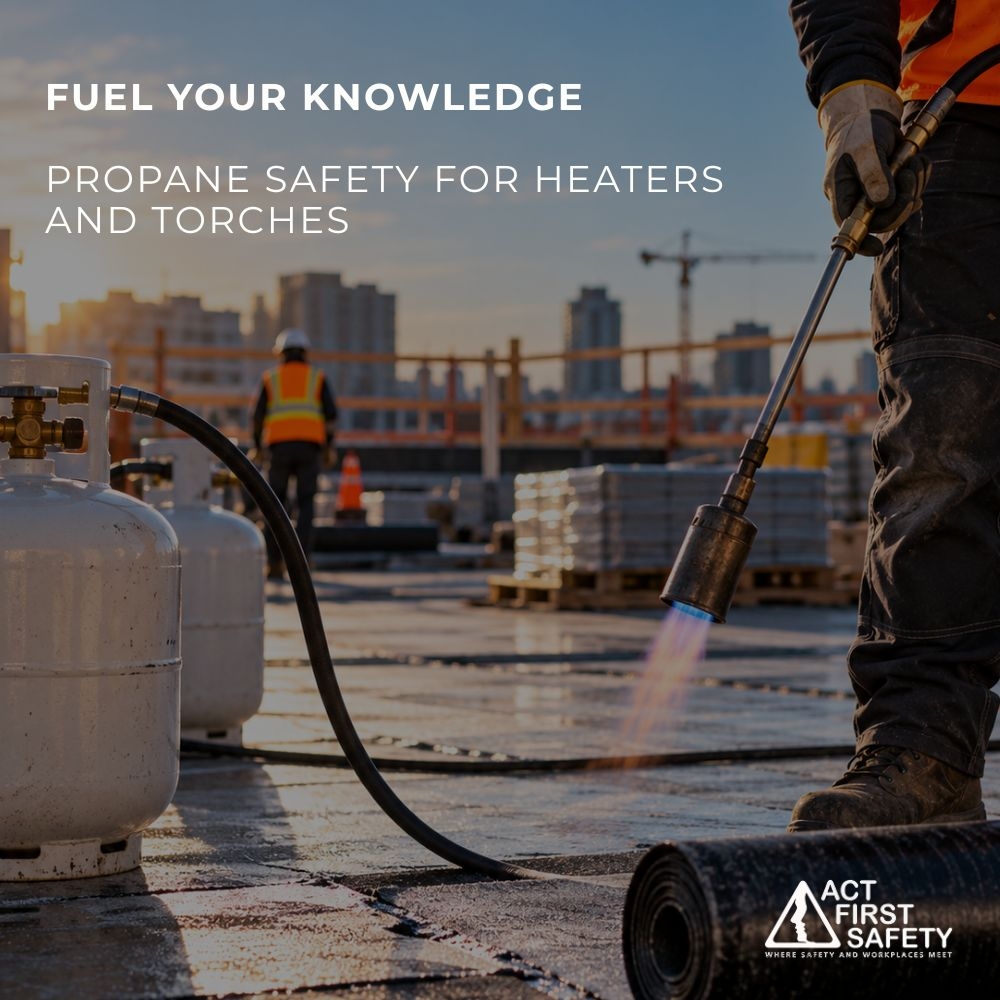
Propane is widely used on construction and maintenance sites to power temporary heaters and torches for applications such as roofing. Operating such equipment requires more than connecting a cylinder and igniting it. It relies on adherence to established propane safety procedures at all times. And that is just one of the reasons why propane safety training matters.
Before starting work, workers must review WHMIS labels and safety data sheets (SDS) to understand the hazards associated with propane.
In Ontario, employers are required to provide appropriate WHMIS education, ensure necessary qualifications are met for their propane tasks, and implement safety controls for both equipment and the workers. When operating propane heaters and torches up to 400,000 BTUH, the training CH-02 Propane for Heaters and Torches is also required.
Needless to say, handling propane should only be left to the professionals trained for the task. Keeping that in mind, today’s blog from Act First Safety, one of the top safety training providers in Ontario, will discuss what crews need to know about propane safety for heaters and torches.
Propane Safety Starts Before The Equipment Is Switched On
Before hooking up a heater or lighting a torch, the worker concerned must check that the equipment is appropriate for the job at hand and that they are properly trained to use it. Always read the manufacturer’s instructions and look around for anything that may lead to a hazard.
Other instructions the concerned must follow to maintain propane safety onsite include:
- Ensuring proper ventilation when using heaters
- Keeping the equipment away from flammable or combustible materials
- Leaving the exits clear and ready for evacuation if needed
As for torches, before using one, concerned workers must check the surface they will be heating and watch for places where the flame could reach hidden materials. Components such as hoses, regulators, and connections should be thoroughly inspected for signs of damage or possible leaks. In fact, leak tests should be performed using a suitable leak detection solution.
Never use a flame to check for leaking gas, as that can be fatal. These checks should happen before beginning work, and the setup should be assessed again if conditions change.
What WHMIS tells workers about propane
The Workplace Hazardous Materials Information System (WHMIS) provides information about hazardous products through labels, safety data sheets, and worker education. Propane is hazardous due to its flammability and pressurized gas content, which are indicated by the following flame and gas cylinder pictograms.
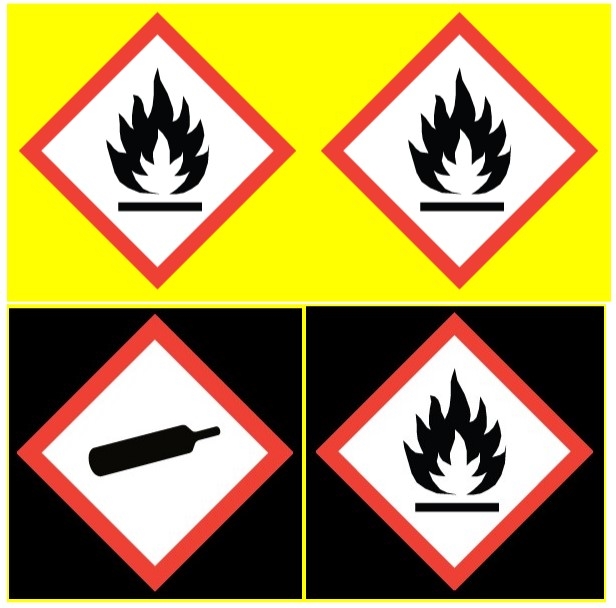
Workers should look for these pictograms on containers and check the supplier’s current label and safety data sheet (SDS) for information on proper storage and safe use of the specific product they have on site.
An SDS will tell workers everything they need to know about the hazards concerned as well as the safe handling and storage of flammable materials. It will also contain instructions about the PPE required and emergency measures that should be taken when needed.
Workers will need some general WHMIS training and instruction in the workplace as to how that information applies to the equipment and tasks they are doing.
That said, WHMIS training and propane safety training should not be considered as substitutes for each other. Knowing how to read and interpret a propane label doesn't in any way qualify one to connect or turn on a heater or torch.
Safety Concerns When Handling Propane: Burns & More
Propane can cause burn hazards when released as a liquid, and direct contact with it can freeze one’s skin or eyes, causing frostbite. Propane leakage during cylinder handling or connecting or disconnecting equipment is the most likely cause of exposure.
This is why workers handling propane should be aware of this risk and follow the product’s SDS diligently. Using proper protective gloves suitable for cold exposure and eye protection gear are a must. If any cold burns are suspected, affected workers must get immediate medical assistance.
While frostbite and burns associated with direct propane exposure are a common concern, there are other hazards to consider as well that require due diligence and attention. We’ll get to these in the subsequent sections of this blog.
Propane Heaters & Carbon Monoxide
Propane heaters can produce carbon monoxide when the combustion of the propane is incomplete. This colourless and odourless gas may build up in work areas with insufficient ventilation, with little warning.
Carbon monoxide presence cannot be detected by its smell or taste, which is why it is known as a “silent killer”. Exposure to carbon monoxide may cause headaches, fatigue, dizziness, and nausea.
In severe cases, exposure can be fatal. If exposure is suspected, individuals must leave the area immediately and move to a location with plenty of fresh air. They must also follow established workplace emergency procedures such as calling 9-1-1.
Some of the safety precautions that can be taken to prevent leaks include following the manufacturer’s instructions concerning the placement, ventilation and safe operation of propane construction heaters.
Ensuring sufficient combustion air along with proper ventilation and arranging exhaust discharge as required are other critical safety measures to take. If working conditions change, workers should recheck their setup to ensure complete safety. Carbon monoxide monitoring can support these precautions, but monitoring does not replace proper ventilation.
Fire Prevention Measures for Propane Torch Operations
When using propane torches, it is necessary to observe the flame and be mindful of how the torch is held and set down.
During roofing work, site structures such as openings, vents, and hidden areas may cause the flame to ignite combustible materials that are beyond the immediate area of work. That, combined with every other reason, is why a lit torch should never be left unattended. Neither should its flame be directed towards a propane cylinder.
To prevent fires, a fire watch should be planned before starting work, including checking for concealed or smoldering fires after using the torch. Follow the worksite's hot work procedures and confirm how long the fire watch must continue to maintain site and worker safety.
Leaked propane can mix with air and become combustible. To ensure safety, cylinders containing propane must be secured in their intended position and stored and protected properly. Exposing a propane cylinder to excessive heat can cause a leak or could even lead to a rupture in the tank, which can be fatal if left unchecked. Workers must make sure empty cylinders are handled just as safely as they may still contain propane vapour, thus posing a fire or explosion hazard.
Who Needs TSSA & CH-02 Training
Workers responsible for connecting, disconnecting, and switching on propane construction heaters and torches must have the right qualifications for the job. This applies to construction labourers, roofers, maintenance workers, and supervisors who carry out such tasks. Commonly prescribed training formats include TSSA & CH-02 training, which come under the broad category of propane training.
CH-02 training, which is the Construction Heater Operator 2 certification, covers the operations of construction heaters and torches having an input of 400,000 British thermal units per hour (BTU/h) or less. However, individuals working with equipment at a higher rating must have the appropriate qualification, for example, CH-01 training, since this certificate covers the same activities without the restriction on input.
TSSA-recognized Record of Training (ROT) programs may be specific to propane or applicable only to heaters or torches. Employers must check the fuel type, equipment scope, and expiry date listed on the worker's card before assigning the worker any tasks. CH-02 Propane for Construction (Heaters and Torches) does not cover all activities involving propane, such as filling cylinders or repairing equipment.
This training includes both theoretical and practical components so that workers can demonstrate the skills required for the job. Because a Record of Training (ROT) is valid for only three years, workers are required to undergo retraining and obtain a new ROT upon expiration.
Conclusion
Handling propane-based equipment is not child’s play. Whether using construction heaters or torches, workers must maintain the utmost caution to ensure on-site safety, both their own and other workers around them. While proper propane handling is essential for maintaining safety, so is receiving proper training.
Act First Safety’s propane safety training helps Ontario workers get certified for the safe handling and use of propane-based equipment for construction, roofing, and RV maintenance jobs. Contact us to learn about the contents of our course to enroll in our certified program.
FAQs
What propane equipment does a TSSA-classified safety training program for Construction Heater Operator 2 (CH-02) address?
The CH-02 operator training includes the connecting, activating, or disconnecting of propane construction heaters, torches, and equipment with an input rating of 400,000 BTU/h or less.
How do you safely check for a propane leak?
Use a suitable leak detection solution according to the manufacturer's instructions. Never use a flame to check for leaks. If a leak is suspected, stop work and follow the worksite's propane emergency procedures.
Can propane heaters cause carbon monoxide poisoning?
Yes. Propane heaters can produce carbon monoxide, a colourless, odourless gas that can accumulate when combustion or ventilation conditions are inadequate. Exposure can cause headaches, dizziness, fatigue, and nausea, and severe exposure can be fatal. Proper ventilation and compliance with the manufacturer's instructions are essential.
What should you do if you suspect carbon monoxide exposure?
Leave the affected area immediately and move to a location with plenty of fresh air. Follow the workplace emergency procedures and call 9-1-1 when appropriate. Do not re-enter the area until it has been assessed and declared safe.