When we think of worker safety, we often direct our attention to using equipment the right way, or wearing the right gear or staying safe in elevated or confined workspaces. However, we seldom talk about noise.
Noise is an inescapable part of most industrial workplaces, and it can be hazardous in its own ways. Act First Safety, providers of all kinds of safety training courses, will outline everything workers need to know about occupational noise in this blog so they can protect themselves against its harmful consequences.
What is Occupational Noise?
While the world is full of sounds, noise is just uncalled for.
Defined as unwanted and/or harmful sound, many workers are exposed to noise in the workplace. Termed “occupational noise”, it is generally a byproduct of tools, machinery, and other equipment.
Exposure to high levels of noise can damage one's ears – often permanently. However, to understand noise that can be qualified as harmful, workers need to familiarize themselves with the units of sound measurement, which include hertz and decibels.
Hertz
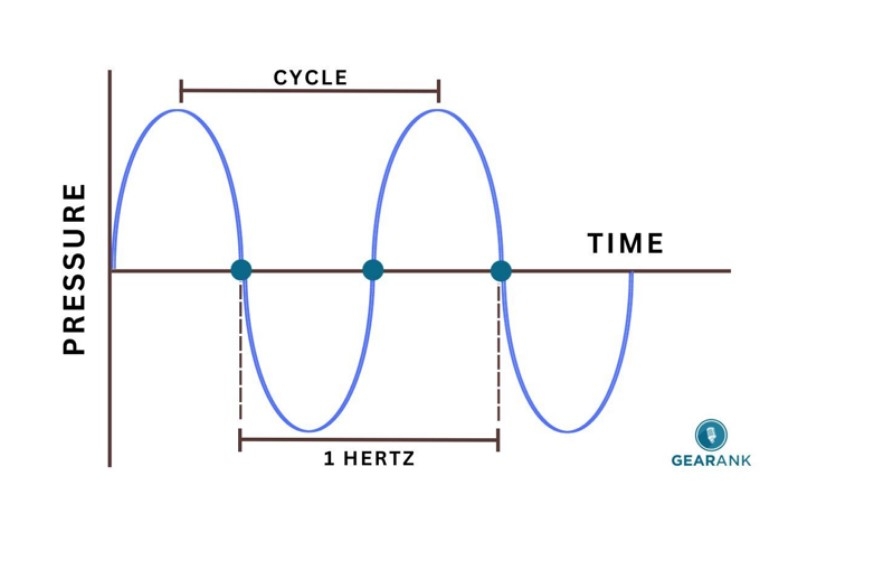
Sound is a mechanical wave of energy. These waves travel through the air by vibrating or oscillating, creating a repeating pattern of rising and falling pressure. The frequency at which they travel is measured in hertz (Hz).
So for example, a frequency of 1 Hz equals one cycle per second, which means 2000 Hz is two thousand cycles per second, and so on. The faster the waves vibrate, the higher the pitch of the sound we hear. A healthy young person would hear frequencies between 20 Hz and 20,000 Hz, which is considered safe.
Decibels
Decibel (dB) is the unit used to measure sound intensity. The softest sound a human with normally functioning ears is capable of hearing measures 0 dB.
That said, because humans can hear a wide range of sound intensities, decibels are expressed on a logarithmic scale, meaning the sound increase is not linear.
For example, a sound of 20 dB has 10 times the intensity of a sound at 10 dB, while a sound of 30 dB has 100 times the intensity of a sound at 10 dB. While sound intensity grows tenfold for every 10 dB jump, the human ear typically perceives this change as roughly a doubling of loudness.
Ear Damage: The Invisible Injury That Goes Unnoticed Till It's Too Late
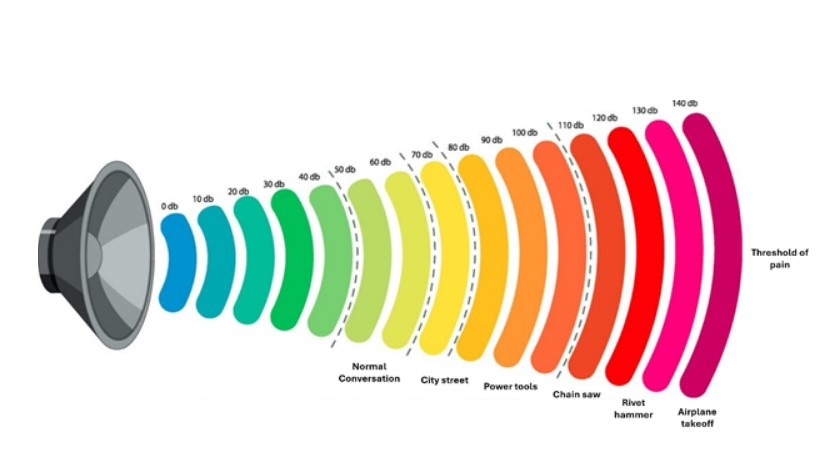
We have already learned that sound intensity jumps 10x with every 10 dB increase. What this means for workers is that the assumption that 90 dB is only slightly louder than 85 dB cannot be made.
The following image demonstrates the real impact of the 10X factor.
The Impact Of Occupational Noise On Workers
The effect noise has on a worker depends on its decibel level. Noise that is between 40 and 70 dB may mask speech, meaning workers will need to raise their voice to be heard. Consistent noise at this level can be irritating and can cause headaches, fatigue, and voice strain. Once the decibel level reaches a sustained 80 dB, ear damage is likely. At 120 dB or more, damage can be instant and catastrophic.
What is Noise-Induced Hearing Loss?
Hearing loss is a normal part of aging. As we get older, the range of sounds we can hear narrows and we lose the ability to hear higher-pitched sounds.
Noise-induced hearing loss (NIHL), on the other hand, is different. Referred to as hearing loss due to the damage caused by noise, NIHL is the byproduct of working in an incredibly loud and noisy environment for a long period of time. It takes a hearing test to determine if a worker has NIHL.
During this hearing test, an audiologist will subject the patient to a range of sounds at different hertz and decibel levels to determine the point at which they can no longer hear sounds. This data is then represented on a graph known as an audiogram to determine if the patient has hearing loss. Normal hearing is defined as being able to hear all frequencies at a threshold of 25dB and above.
Age-related hearing loss typically causes the gradual loss of the ability to hear higher frequencies and will appear as a downward-sloping pattern on an audiogram. In contrast, noise-induced hearing loss commonly affects hearing around 3,000 to 6,000 Hz, with the greatest loss often occurring near 4,000 Hz. This creates a characteristic "noise notch" on the audiogram, as shown below.
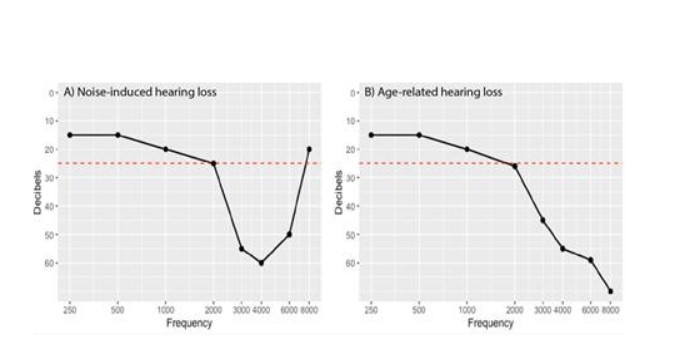
Figure 1 (Boussaty et al. 2022 Hearing loss and tinnitus: association studies for complex-hearing disorders in mouse and man)
Why Learning About Noise-Induced Hearing Loss Is Critical For Workers
Losing one’s hearing can have a significant impact on a person's social life, mental health, and overall well-being. Workers who suffer hearing loss might find themselves withdrawing from social life because of the stress of not being able to follow conversations.
People with hearing problems might discover they no longer enjoy going out with friends and family – especially when it's noisy, whether it's to a restaurant, the mall, a festival, or a concert. They might struggle at work, at school or even get accused of not paying attention or ignoring people.
Not being able to hear can also make someone more likely to get hurt if they can't hear hazards or warnings nearby. And if left untreated, the impact of hearing loss can be really severe. It can lead to other complications like social anxiety, stress and depression, which in turn can have a diminishing effect on one’s overall physical health.
In fact, people with hearing problems may find themselves less active and withdrawn if they can't engage in the activities they used to enjoy.
Regulations Concerning Occupational Noise In Ontario
In Ontario, employers and supervisors are responsible for taking every reasonable precaution to protect workers from hazards; that includes protecting them from the dangers of noise.
Ontario Regulation 381/15 – Noise addresses the measures and procedures that the employer must undertake when it comes to protecting workers from occupational noise. In Ontario, no worker may be exposed to noise levels greater than an equivalent of 85 dBA over an 8hr shift (85dBA Lex,8).
When workers are exposed to high noise levels, employers have to take action to protect their hearing. This means implementing strict protocols like engineering and administrative controls, and provision of personal protective equipment.
How To Protect Workers Against Hazardous Noise
When deciding how to protect workers from the side effects of occupational noise, reviewing the hierarchy of controls is a good place to start.
It's a principle that’s commonly taught during various safety training courses like Working at Heights training, Joint Health and Safety Committee certification or JHSC training, or WHMIS. The same rules apply to preventing occupational illnesses like noise-induced hearing loss.
Employers have to assess which control measures are practical and reasonable for their workplace. The following chart can help in this regard:
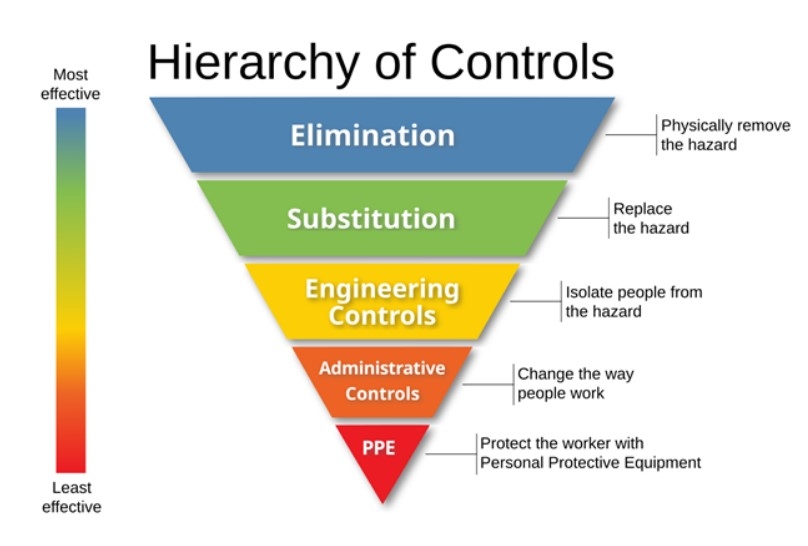
Here’s how each of these controls can apply to protecting workers against the dangers of high decibels in the workplace:
Elimination:
Remove the source of noise from the work area. For example, a loud generator needed onsite can be placed just outside to the main work zone to prevent noise exposure. However, this only eliminates the hazard from the immediate work area and not the workplace as a whole.
Substitution:
Choose low-noise tools and machinery. For example, electric chainsaws operate at 80-100 dB versus gas chainsaws, which can be as loud as 100-120+ dB.
Engineering:
Ensure equipment is properly maintained and lubricated to minimize noise
Equip noisy exhausts with acoustic mufflers
Install cushioning beneath machinery and equipment to reduce vibration transmitted through the floor and walls
Isolate the equipment with acoustic shielding or enclosures
Isolate the workers with acoustic shielding or enclosures
Install sound absorbers to reduce echo in large spaces
Administrative:
- Develop and implement a hazardous noise control program
- Test the noise levels at the workplace to take appropriate precautionary measures
- Install signage warning of work areas with hazardous noise levels
- Train workers on the dangers of hazardous noise and how to protect themselves against it
- Reduce workers’ exposure time to hazardous noise
- Encourage workers to get their hearing screened regularly
Personal Protective Equipment (PPE)
- Provide workers with hearing protection like earplugs and/or earmuffs whenever necessary
Types of Hearing Protection That Can Be Used In Ontario Workplaces
Hearing protection must be selected based on the following factors:
- The sound levels the worker is exposed to
- The attenuation (reduction of sound pressure on the ear) provided by the device
- Manufacturer’s instructions about the use and limitations of the device
Two major types of hearing protection devices are commonly used on most worksites:
- Earplugs, which go inside the canal, and
- Earmuffs, which fit over the ears.
These devices can be worn individually or used together to provide greater protection in high-noise environments. The level of protection provided by a device is measured in decibels and is indicated by its Noise Reduction Rating (NRR).
The most appropriate PPE type for a crew depends on its hazardous noise control program. In any case, the chosen device should be able to protect a worker’s hearing while also ensuring they can hear enough to remain alert onsite.
The CSA standard Z94.2–14 (R2024) Hearing protection devices – Performance, selection, care, and use explains how to calculate the noise attenuation of hearing protection to de-rate noise levels and assist in the selection of PPE that is best suited for your workplace.
Earplugs
NRR achieved: 50%
dBA measured – [ NRR (0.5) – 3 ] = dBA reduced
Example: Earplug with NRR of 33 dBA and noise level of 90dBA
90 – [ 33(0.5) – 3 ] = 76.5 dBA
Earmuffs
NRR achieved: 70%
dBA measured – [ NRR (0.7) – 3 ] = dBA reduced
Example: Earmuffs with NRR of 30 and noise level of 90 dBA
90 – [30(0.7) – 3] = 72 dBA
Dual Protection
NRR achieved: 65%
dBA measured – [ (NRRhigh +5)(0.65) – 3 ] = dBA reduced
Example: Earplugs with NRR of 33dBA + Earmuffs with NRR of 30 dBA and noise level of 90 dBA
Earplugs NRR 33 > Earmuffs NRR 30 so we use the NRR of the earplugs for the calculation
90 – [(33+5)(0.65)-3] = 68.3 dBA
Having sound knowledge of NRR calculations can help in the selection of the most suitable PPE, which in turn, is critical for maximizing the protection of workers and reducing the likelihood of work-related hearing loss in the future.
Limitations of Hearing Protection Devices
Getting the right fit is crucial when it comes to hearing protection devices. Earmuffs have to fit snugly against the worker’s skin and cover their whole ear to maximize protection.
As for earplugs, they need to be put in properly to ensure they are not loose. A loose fit or damage to the plugs will reduce their effectiveness. It's also really important that workers know how to inspect, maintain and use their hearing protection devices to get consistent use out of them.
Reusable hearing protection like custom earplugs also need to be cleaned regularly to prevent ear infections. Earmuffs need new cushions and dampers (or foam lining) to keep them hygienic and extend their lifespan. Workers must follow the manufacturer's instructions for cleaning reusable hearing protection.
Conclusion
Noise-induced hearing loss is a really serious but preventable risk at work. Understanding how sound is measured in hertz and decibels is a good starting point in recognizing the risks of noise exposure.
Workplace law sets out the requirements for protecting workers from hazardous noise, and the hierarchy of controls gives a framework for reducing exposure by focusing on elimination, substitution, engineering controls and administrative controls before relying on personal protective equipment (PPE).
Where noise hazards can't be controlled through other means, choosing the right hearing protection devices and getting them to fit properly can really help reduce the risk of permanent hearing damage. By understanding the risks and taking the right control measures, workplaces can protect hearing health and prevent lifelong hearing loss.
We can help leadership and employers protect their crews against occupational noises. Act First Safety’s various safety courses in Ontario, such as JHSC training and competent supervisor training, educate management on noise protection programs that can be undertaken at the workplace. We also supply professional-grade noise protection equipment at our Scarborough facility. Contact us to learn how we can support your worker protection initiatives.
FAQs
Can hearing loss induced by occupational noise be reversed?
Hearing loss is typically permanent, as damaged hair cells in the inner ear are incapable of regenerating.
Which industries face the highest risk of occupational noise exposure?
Construction, manufacturing, mining, transportation, forestry, agriculture, and warehousing are some of the industries that experience high decibel levels on an everyday basis.
What are some early signs of noise-induced hearing damage?
Tinnitus or ringing in the ears, difficulty hearing conversations in crowded environments, increasing the volume on devices, and listening to muffled speech are early warning signs of hearing damage.