Workplace Hazards and Worker-Created Risks
What does it take to build a safe, kind, and humane workplace in Ontario? Some might say voluntarily following CSA standards is key. Others might emphasize the hiring of trained workers only. While others may think the provision of safe machines and PPE is enough.
The truth is, it takes a combination of all of the above, along with a couple of extra measures, to create a workplace that is both safe and humane. In today’s blog, Act First Safety, a Scarborough-based safety training provider that’s widely trusted in Ontario, will discuss what makes a workplace safe, responsible, and ethical for all.
Workplace Hazards & Worker-Created Risks That Hinder Safety
While safety hazards exist in most workplaces, sometimes workers end up creating risks that did not naturally exist in the workplace.
However, appointed safety personnel tend to focus on obvious workplace hazards first, such as fall risks, exposed machinery, or other hazardous substances. Employers too must identify these hazards and implement controls to reduce associated risks.
Examples of controls include installation of physical barriers, use of specialized tools and equipment, provision of personal protective equipment, and employee training.
But the question remains – what happens when the hazard is not created by the workplace itself, but by the actions or behaviors of a worker?
Human factors such as fatigue, distraction, rushing, poor communication, or failure to follow established procedures can also create significant workplace risks. Recognizing and addressing these less visible hazards is an important part of creating a safe and effective workplace.
One of the first steps employers can take in this regard is to ensure the workers showing up for more sensitive or demanding jobs are fit for duty. We will explain what that means in the next section.
What is Fit for Duty?
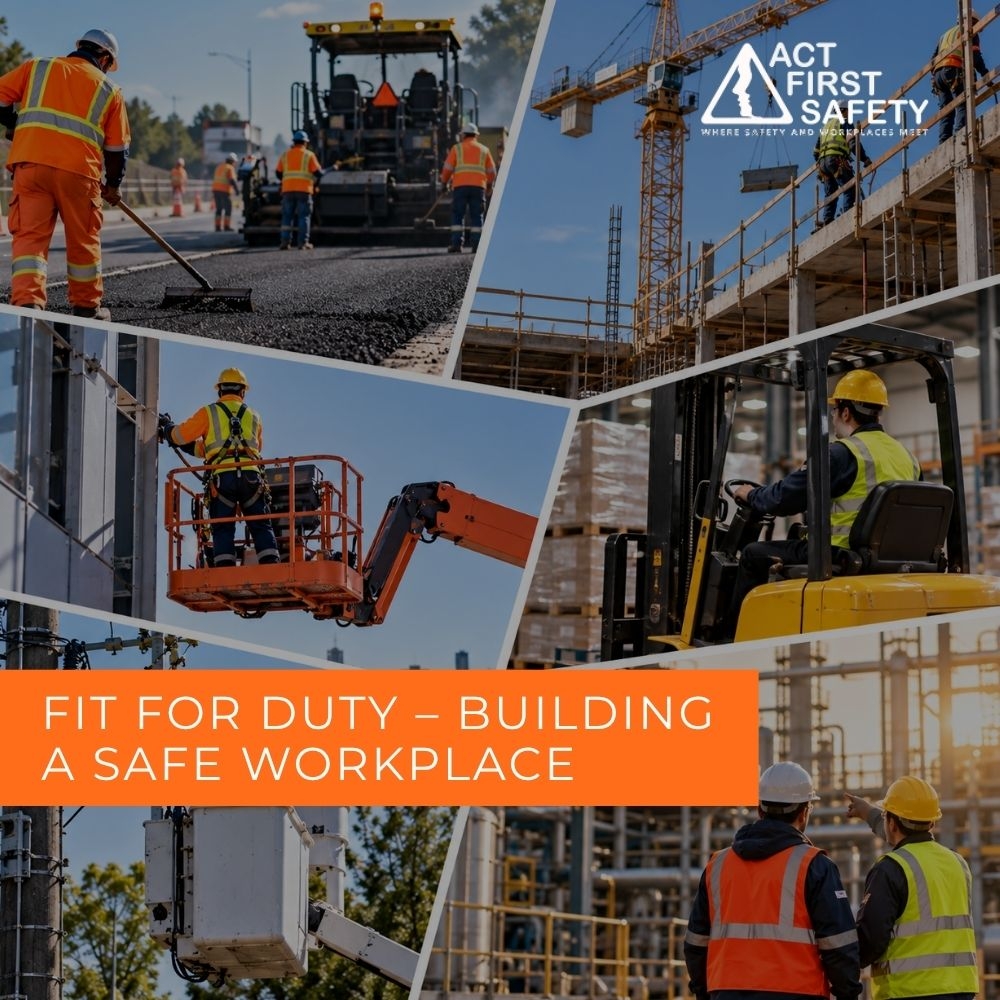
It is important for workers to be fit for duty, meaning physically and mentally capable of competently performing their assigned tasks. Workers who are not fit for duty may be, in their impaired state, more likely to injure themselves or others. Impairment can take many forms:
- Fatigue (mental or physical)
- Use of illegal drugs
- Use of alcohol or legal drugs
- Use of certain prescribed or over-the-counter medications
- Mental stress
- Mental decline
Most people think of illegal drugs or alcohol when they hear the word impairment, but many over-the-counter medications can cause drowsiness, and stress caused by events in one’s personal life can cause fatigue and lapses in attention.
Impairment of any kind can affect a worker’s ability to work safely. The irony is that those in safety-sensitive positions are at significantly higher risk of suffering from stress, fatigue, or any other sort of impairment due to the nature of their work.
What is a Safety-Sensitive Position?
Safety-sensitive positions are jobs in which impairment can directly result in serious harm to a person, property, or the environment.
These jobs typically include tasks like operating equipment, operating vehicles, working with hazardous materials, or jobs that involve matters of life/death (i.e. surgeon).
Such safety-sensitive positions typically have a zero tolerance for impairment on the job. In addition, these workers are expected to self-report their impairment to a supervisor or management so they can be temporarily removed from the job till they are fit for duty.
What are the Employer’s Responsibilities in case of Worker Impairment & Fit For Duty Protocols?
Employers must take the lead in developing, implementing, and enforcing the requirements of their workplace’s fit-for-duty policy. They must work in consultation with the Joint Health and Safety Committee (JHSC) or Health and Safety Representative, if any, to define the rules of the policy and, along with jobs that can be deemed as safety-sensitive positions.
They must also set rules for worker alcohol or drug testing, including selecting a testing service provider and determining conditions that make said testing mandatory. Circumstances that require disciplinary action must also be pre-decided accordingly.
That said, employers must make sure that the representative they select has received JHSC training so they can work together from a place of knowledge and experience.
The Role of Competent Supervisors in Enforcing Safety Protocols
Supervisors must monitor and observe workers to ensure that work is conducted in a safe manner. Only personnel with competent supervisor training must be chosen for this job. They should be briefed about the company’s fit-for-duty policy as well so they can enforce it better.
When the supervisor is reasonably suspicious that a worker is not fit for duty, they must determine the concerned worker’s lack of fitness as per predefined protocols. A worker who is not fit for duty may need to be reassigned to different non-safety-sensitive tasks or may need to be removed from the workplace entirely.
It is important to remember that if a worker is not fit for duty, they may not be fit to drive themselves home either. Employers and supervisors should arrange alternative transportation for the concerned worker, or call 9-1-1 in case of emergencies.
The Role of Workers in Fit-For-Duty Protocols
Workers must truthfully report themselves fit for duty and remain fit while on duty.
If they are not fit for duty or they become reasonably suspicious that another worker may not be fit for duty, they must notify a supervisor.
If the worker loses their driver’s license, has their driver’s license suspended, is under driving restrictions, or is facing impaired driving charges, they must notify their supervisor immediately.
Workers must also follow safety protocols, use medications responsibly, take appropriate actions to prevent fatigue or stress, and self-disclose any addictions they have that may impact the safety of their work to their employers in advance.
How to Build a Workforce that is Fit For Duty
Maintaining a workforce that is fit for duty starts with the development of a robust fit-for-duty policy that includes relevant training for management, supervisors, and workers. It should also clearly define what an impairment is, along with employer and worker responsibilities for the same.
Accommodations and the Ontario Human Rights Code
Workers should feel comfortable talking to supervisors or their employer. They often tend to hide their impairment or addiction out of fear that they might be fired. For this reason, establishing accommodation guidelines in accordance with the Ontario Human Rights Code, alongside a structured progressive discipline policy, is a necessary part of formulating a comprehensive fit-for-duty policy.
For certain employers, the creation of an Employee Assistance program can further bolster health and safety in the workplace by making available to workers help they may otherwise struggle to secure on their own.
Addiction as a Disability
The Ontario Human Rights Code recognizes addiction as a disability, which protects workers who struggle with addiction from discrimination. This means that employers cannot discriminate against a worker with an addiction, and must accommodate them until the point of undue hardship.
Employers must include in their fit-for-duty policy provisions for the development of an accommodation plan, which ideally should:
- Clearly state the accommodation measures that have been agreed to based on the worker’s medical information
- Identify who the worker can talk to with regard to any questions they may have about the accommodation plan
- Be flexible as the worker’s needs and medical information may change
- Allow the worker to attend treatment programs, giving them time off from work to pursue said treatment
- Take into consideration that a worker with an addiction may also have other physical or mental disabilities that require accommodation
- Provide access to the resources of the Employee Assistance Program
The important thing to remember is that if a worker’s addiction is interfering with their ability to perform essential duties on the job, employers must provide them with support for addiction treatment. Unless it can be proven that such accommodation would impact the company adversely. Exceptions include:
- The cost of the accommodation would impact the nature or affect the viability of the enterprise
- Notwithstanding accommodation efforts, the health and safety risks to workers or members of the public are so great that they outweigh the benefits of providing equal treatment to the worker with the addiction
In case the afflicted worker refuses treatment, and their refusal impacts the health and safety of other workers and/or members of the public, employers must take necessary disciplinary action. It should be clearly stated in the fit for duty policy that refusal to seek treatment for an addiction that impacts the health and safety of workers and/or the public can be grounds for termination as part of the disciplinary action.
Safety Legislation
Under the Occupational Health and Safety Act (OHSA), employers must maintain on-site naloxone kits and ensure first aiders are trained in their administration if they know, or should reasonably know, that a potential risk for opioid overdose exists in the workplace.
Employers must not disclose to any employee under them, except trained safety officers or first-aiders, the identity of the worker or workers concerned who require naloxone administration in the workplace.
Conclusion
Worker impairment is a serious concern on most jobs and should be dealt with delicately. It is critical for employers to have a proper fit-for-duty policy in place so workers can understand whether they are truly fit to perform the day’s job or not. Additional support in case of impairment or addictions can make a workplace truly safe for everyone.
A necessary step in safety is worker training. Act First Safety’s Scarborough institute is a hub for certified worker safety training in Ontario. From popular courses such as forklift training to niche programs such as respirator fit testing, we provide them all. Contact us to learn more about our CPO-approved safety training programs.
FAQs
What resources are available if a worker discloses to their employer or supervisor an addiction or other impairment that requires treatment and/or support?
Calling 2-1-1 or visiting 211central.ca can help you find local services (GTA and surrounding regions) for a variety of needs. In addition, visiting 988.ca, Canada’s Suicide Crisis Helpline, or calling/texting 9-8-8 is an instant way to get access to relevant resources.
What if a supervisor or an employer is not fit for duty?
In the event that a person in authority in the workplace, such as a supervisor or management, is not fit for duty, workers must report to the next person in the chain of authority. HR can also be reported to.
Can an accommodation plan require an employer's worker to seek treatment if it is self-disclosed or discovered that an addiction impacts their ability to report for or stay fit for duty at work?
Yes, an employer may include required addiction treatment in a worker's accommodation plan if the addiction affects their capability to perform work safely. Refusing treatment does not automatically lead to immediate termination. In situations where treatment is declined or discontinued prematurely without a willing return, the workplace's progressive discipline process must be applied. For additional guidance, refer to the Ontario Human Rights Commission resources (https://www.ohrc.on.ca/en).