When at work – especially on construction sites, warehouses, etc., it is normal to think of safety all the time because we want to get home to enjoy time with our family, pets, and friends. But work can be daunting, demanding you regularly engage in activities like heavy lifting and using ladders to reach heights that you might not do in your spare time.
However, when it comes to the holiday season, even working at home can be hazardous. How, you ask? Because you might be involved in tasks that you do less frequently, like hanging decorative lighting, hauling trees, etc. You might not be aware of the hazards they bring, but they do.
So, whether you celebrate Ramadan, Chanukah, Christmas, or enjoy decorating your house, you should exercise the same caution that you use at work.
At Act First Safety, we not only provide instructor-led safety courses to workers across Ontario, but we also provide valuable tips and guidance to ensure people stay safe in all spheres of their lives. In today’s blog, we will shed light on how you can safely decorate for and enjoy this holiday season.
How To Have A Safe Holiday Season
Decorating might be fun, but it can quickly turn into a disaster if you do not take the necessary safety measures. Here’s how you can enjoy a safe and hazard-free holiday season:
Installing Lights Safely Around The House
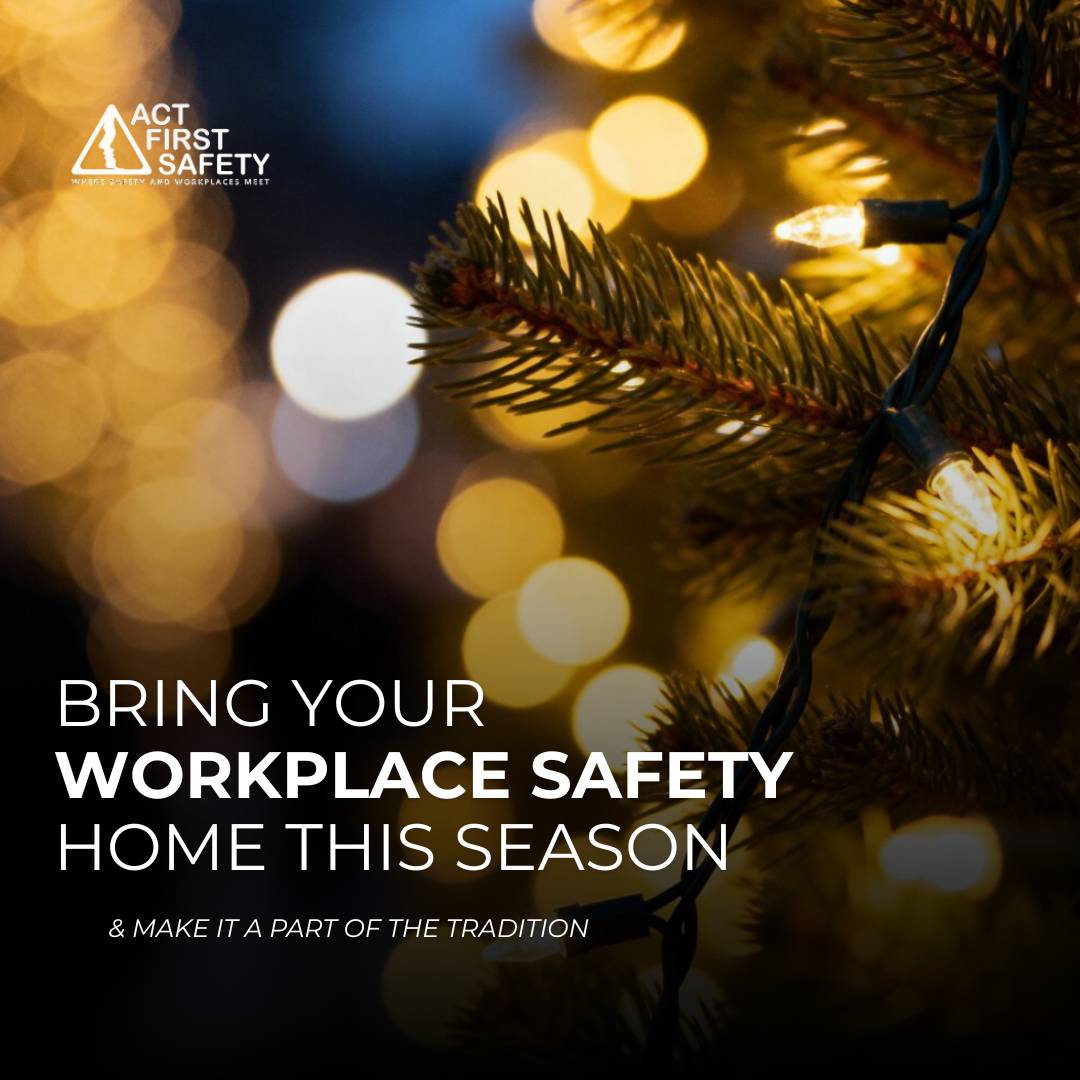
What’s not to love about lighting? It can be soft, bright and shiny, extensive, minimalistic, and coloured. And you can always find something suitable that falls within your budget. Great lighting can perk you up or calm you down, while adding to the festive mood of the season. In fact, it’s the easiest way to brighten the holiday mood, especially when combined with other decorations.
PRO SAFETY TIP: To ensure you enjoy twinkly lights at home without any danger, turn them off before going to bed or leaving home. This can prevent electrical hazards such as short circuits and fires.
Also, if you are decorating your workspace and resorting to machines such as MEWPs for support, make sure you have working at heights training before you jump aboard for lighting installation.
Maintaining lighting and electrical safety
Inspect First
Just like at work, when you are inspecting a forklift or boom lift before operation, you have to check the lighting before using it. That means:
Labels should be present, legible, and indicate certification for either indoor or outdoor use. Lighting should have a mark from an accredited certification agency such as CSA, cUL, or cETL.
Physical Inspection requires you to seek out any compromised equipment, including light strings and extension cords that have frayed wires, loose connections, or broken sockets that make the lighting unusable. Discard damaged equipment. Light bulbs should not be broken or burned out and need to be replaced when in this condition. Make sure manufacturer recommendations are followed regarding bulb style, models, and wattage.
Compatibility should be considered when combining lighting and decorations. For instance, metallic trees do not pair well with electric lights and hence, should be avoided to prevent the creation of potential hazards.
PRO SAFETY TIP: Check the Healthy Canadians Recalls and Safety Alerts Database before buying or using lights to find out about the latest recalls.
Preparation for safe installation
Use the correct lights for indoor/outdoor use and plug them into outdoor-rated, Ground-Fault Circuit Interrupter (GFCI) outlets when decorating outside.
Choose the right light for the job. Remember that light strings and other decorations are rated for indoor or outdoor use. Ensure that indoor lights and decorations are only used inside, never outdoors.
Lighting clips are the best choice for securing lighting. Nails and staples could damage cords.
Wattage: Read the package instructions and do not exceed the recommended wattage.
Extension cords should be of the right length to avoid connecting multiple cords or ‘daisy-chaining’ more than three strands of lights together. Always refer to the manufacturer’s instructions for more information on correct use and to avoid overloading outlets.
Planning where you will be plugging in your lighting and extension cords will avoid overloading circuits. Plugging too many lights and decorations into an outlet may overheat the circuit and start a fire.
Hazardous Materials: Some lighting contains hazardous chemicals. Avoid these types, especially if children and pets are in the household. Dispose of lights with hazardous materials in the proper waste stream.
PRO SAFETY TIP: An unfortunate consequence of some festive decorations are fire hazards. Check your fire extinguisher to make sure it is fully charged and secured safely in an upright position.
Set up your installation routine for success
Hanging lights and decorations can take some planning. Make sure you have everything you need, including someone to help you if possible. Your helper can hold some of your tools and assist you with stringing decorations like lighting, thus preventing ladder-based accidents such as reaching over and losing balance to access tools.
They can also help you if you are working at heights or using ladders and stools. They can hold the ladder and keep it steady while you are on it. It’s always a good idea to get someone to assist from the ground if you are using a ladder.
If you are already well-versed with fall protection training, you can use your skills and apply them here to ensure you have a safe installation experience.
- Keep decorations and cords away from emergency exits, sprinklers, and fire alarms.
- Secure outdoor decorations to prevent them from blowing into power lines or becoming road hazards.
- Never run cords under carpets or furniture where they might overheat and cause a fire hazard.
- Avoid running cords across hallways or doorways to prevent tripping hazards.
- Do not run a cord through a doorway as it may lead to damage.
- Never pull or tug lights to remove them.
Getting & Setting Up Your Tree Safely
Have the annual tradition of cutting and getting your own tree? Safety measures are necessary to ensure the process goes smoothly.
Real Trees - Lumberjacks not required
Whether you are picking up your tree from the Boy Scouts Christmas tree lot or cutting it down from somewhere out of town, some safety precautions are in order.
You don’t need a chainsaw safety course to cut down your family Christmas tree. However, using common sense, along with a hand saw and leather gloves, can help you safely get the tree you want to your home.
Once you get it home, you should follow the tips we have given below to make sure you have the safest Christmas possible.
- Secure your tree in a sturdy stand to keep it upright
- Keep it away from high-traffic areas such as staircases and doorways
- If you have purchased your tree from a lot, create a fresh cut at its bottom for better water absorption before you place it in the stand
- Always use gloves when moving and installing the tree
- Water a live tree daily once you have brought it indoors to keep it from drying out
While the choice between a live tree or a fire-resistant, artificial tree will depend on your personal preferences, traditions, convenience, space, and the environment, you must enjoy the holidays your way.
PRO SAFETY TIP: Dispose of the tree as soon as the holidays are over, or as soon as the needles start to fall. Make sure you follow local regulations for disposal, as most municipalities have tree recycling programs that you can make use of.
Fire Safety
- If you have purchased a live tree, place it at least three feet away from heat sources like fireplaces, radiators, candles, portable heaters, and stoves.
- Keep lit candles at least 12 inches away from flammable items like decorations, curtains, and furniture.
- Never leave lit candles unattended and consider using flameless, battery-operated candles instead.
- When lighting candles, remove flammable materials from the area. Keep candles in stable spots where they won’t be tipped over, and never leave them burning without supervision. Avoid placing lit candles on Christmas trees or close to any evergreen decorations.
All Around Safety: Handling Kids, Toys, and Decorations
So, while your employer is keeping you safe every day, it’s your responsibility to keep children and pets at your home safe during the holiday season. Below are some tips that you can easily practice during the holidays:
- Remove all wrapping papers, bags, paper, ribbons, and bows once gifts are opened, as they pose a suffocation and choking hazard for small children.
- Keep breakable ornaments away from children and pets. They may become sharp and dangerous.
- Avoid decorations with small, removable parts that could be a choking hazard.
- Opt for tinsel, icicles, and other decorations made from plastic or metals that do not contain lead. Don't let children put decorations in their mouths, as some may be harmful to their health.
- Throw away all toy packaging right away—such as plastic bags, wraps, foam pieces, staples, twist ties, and protective films—as these materials can pose choking or suffocation risks to children.
- Also make sure batteries are securely installed by an adult and kept out of children’s reach.
- Keep children away from button batteries and lithium coin batteries, which can cause life-threatening injuries if swallowed.
- Secure the battery compartments of electronic toys, flameless candles, light-up necklaces, and musical ornaments carefully.
- Wrap small batteries in tape before disposing them.
- Make sure decorative lights are out of reach of young children and pets that might try to put them in their mouths.
- Avoid decorations that resemble candy or food that may tempt a young child to eat them.
- Place potentially poisonous holiday plants out of reach of children. This includes poinsettias, mistletoe berries, Jerusalem cherry, and holly berry. Contact your local Poison Control Centre if you suspect poisoning.
General tips for a safe, sound, and joyous holiday season
Holidays can be busy and joyous times, but decorations and new toys can bring risks along with festive cheer. Protect yourself and your family by understanding how to handle any health or safety risks associated with the holiday items you bring into your home. Minimize your risks at every opportunity by following the safety tips included within this article.
Final Word: Now, it’s time to kick your boots up and relax
As you settle in and enjoy the glow of the season, remember that the care you put into creating a safe, welcoming home becomes a part of the traditions your family carries forward.
Twinkling lights, cherished ornaments, and the familiar scent of holiday greenery do more than brighten a room—they connect generations and create lasting memories. By celebrating safely both at home and at work, you ensure that these moments of comfort and joy continue for years to come and with you in them.
Act First Safety, the most credible provider of workplace safety training courses in Ontario, wishes you a blessed and safe holiday season.
Want to keep your crew extra safe and sound this time of the year? Contact us to know more about our safety programs.
FAQs
Are holiday lights a fire hazard even when they are new?
Overheating is a common occurrence in new lights that are not CSA or CUL certified. Furthermore, they might cause a fire if they are plugged into overloaded circuits.
Are artificial trees safer than real trees?
Not all artificial trees are safer. Only those rated “fire-resistant” can minimize fire risk. If you are using a real tree, you must water it daily to prevent dryness and the associated fire risk.
Do outdoor decorations require special electrical equipment?
Yes. Every single element you use – from lights to plugs and cords must be rated for outdoor use and connected to GFCI outlets for complete safety.