Key Takeaways:
The trifecta of working at heights training, aerial lift safety training, and first-aid training can make any workplace safe and efficient. Here's how they help:
- By combining these three courses, employers can drastically cut down workplace emergencies and fall-related fatalities in Ontario
- Each full-day course provides both classroom and practical training that is compliant with CSA standards and provincial Occupational Health and Safety (OHS) regulations
- Most certifications need to be refreshed every three years or after a major incident or near miss at the workplace
- The ultimate aim of every course is accident prevention and ensuring workers get home safely to their families at the end of every day
- Every year on April 28, Canada observes the National Day of Mourning to remember the workers whose lives have been lost on the job
Introduction: Safe Work at Heights Starts Before You Leave Home
Every year on the National Day of Mourning on April 28, families and workplaces commemorate workers who've been injured, harmed or made ill by their job, thus altering the lives of their families forever. The sad truth is that workers do not have to suffer. Neither do their families need to.
Falls are the leading cause of injuries and deaths in Canadian workplaces, with an average of 42,000 fall-related accidents taking place every year. Preventing these injuries is the need of the hour, and safety training is the key to making Canadian workplaces as risk-free as realistically possible.
At Act First Safety, one of Ontario’s most reliable providers of CPO-approved safety training programs, we strongly recommend working at heights training, aerial lifts training, and first aid training for companies involved in construction, industrial maintenance, and facilities management. These comprehensive training programs are pivotal in ensuring the safety of the entire workforce.
By combining them, employers can build an all-encompassing safety net that covers fall prevention, injury prevention, and emergency response in case the worst happens.
MEWP & Aerial Lift Training: Complying with Safety Off the Ground
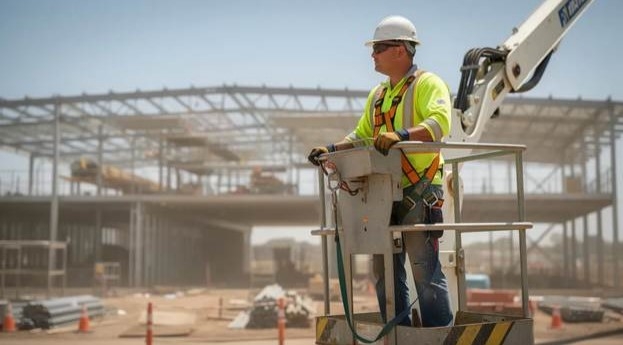
A typical aerial lift training course runs one full day (6–8 hours), with time split between classroom theory and supervised practical training on specific equipment.
Most major mobile elevating work platform (MEWP) types are covered in the course, including:
- Scissor lifts that provide vertical access
- Articulating boom lifts that help in working around obstacles
- Telescopic boom lifts that offer maximum height and reach to get workers as high as they need to go
The theory aspect of the course covers the CSA B354 standard, which includes identification of hazards such as overhead powerlines and uneven ground, tip-over prevention, and safe operating procedures.
As for the practical part of the course, it primarily focuses on pre-start inspections, function tests, controlled ascent and descent, and emergency lowering.
Certificates provided at the end of the course are normally valid for 3 years, post which a refresher course becomes necessary. Refresher programs may also be organized immediately after any accidents that take place, or if new equipment types are introduced, or if variables such as altered worker behavior, site conditions, etc. deem it necessary.
Working at Heights Training: Fall Protection that Puts Family First
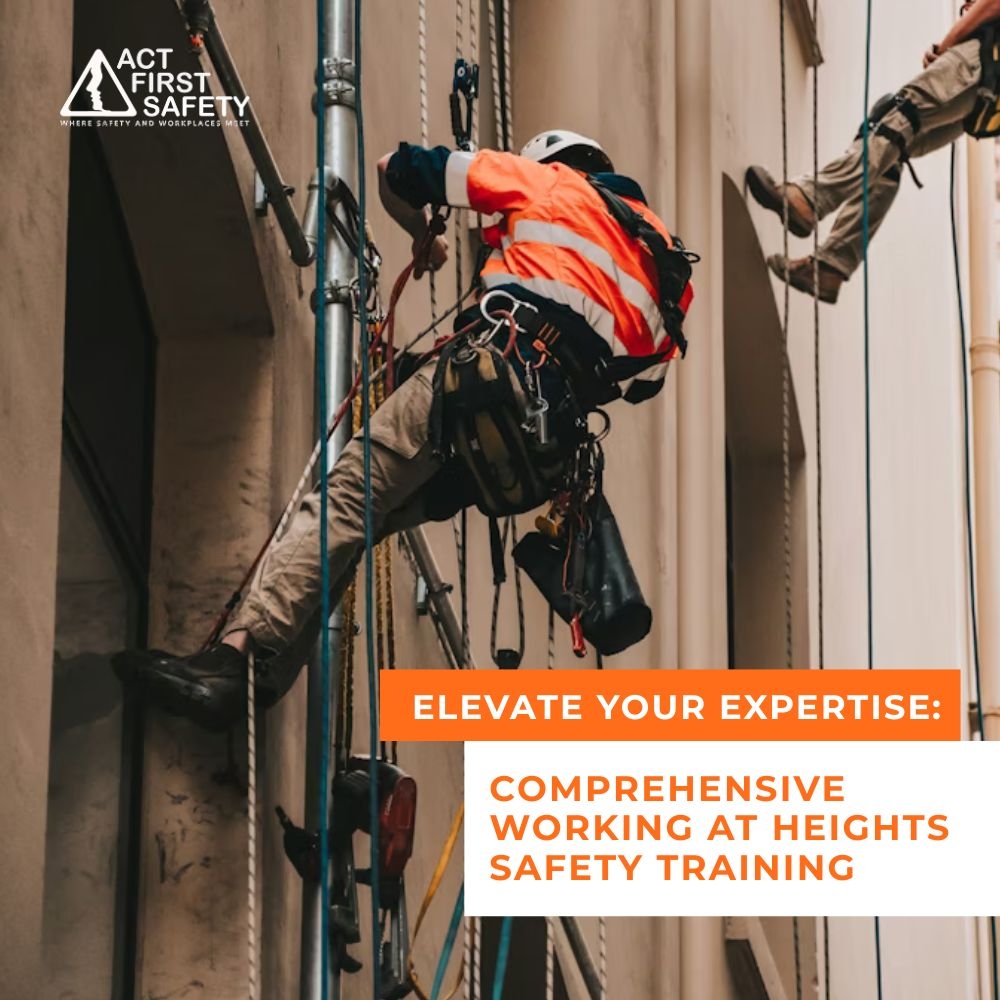
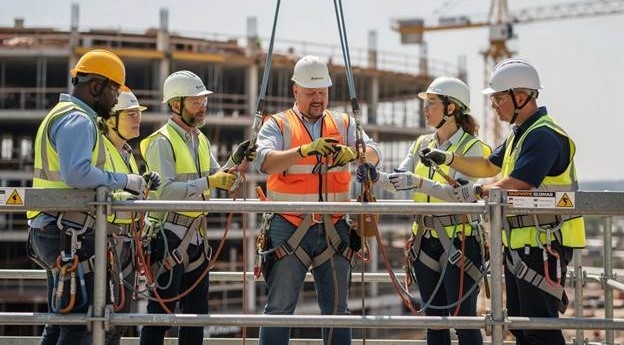
In the province of Ontario, Working at Heights training is mandatory for crews who are exposed to fall hazards when working at elevated spots such as edges, roofs, open shafts or any other similar platforms. The training provided must be approved by the CPO under the Ontario Occupational Health and Safety Act (OHSA).
Core learning objectives include:
- Spotting fall hazards and taking control of them
- Knowing the systems and equipment for safe access
- Prioritizing worker safety by using guardrails, fall arrest, and travel restraint systems
- Individually fitting, donning and doffing and inspecting worker safety equipment
- Safe planning and execution of all tasks at height
Major falls can have dire consequences such as paralysis, brain injury, and even death, which this training program can prevent. Proper tie-off, safe practices, and pre-task planning are the most effective ways to ensure that partners, children, and parents of workers get to see their loved one return home safely after every shift.
First Aid Training: When Every Second Counts
First aid training is the third essential piece in the puzzle of safe work at heights. When a worker falls or is struck by equipment, having a trained responder gives them the best chance of survival until the paramedics arrive.
Courses commonly include:
- Emergency First Aid (1 day)
- Standard First Aid with CPR (2 days)
As of June 2026, the titles of first-aid programs are changing to:
- Basic First Aid (1 day)
- Intermediate First Aid (2 days)
These changes to first aid training will be introduced in June 2026. They are in accordance with the requirements of CSA Z1210 - First-aid Training For The Workplace – Curriculum & Quality Management For Training Agencies.
Some of the critical skills for responding to an aerial lift accident, for instance, include scene assessment, spinal precautions after a fall, bleeding control, shock management, CPR and AED use.
Sample Scenario: Imagine a worker in a boom lift collapses. Co-workers activate the emergency lowering using ground controls, manage the fall arrest system during descent, and perform first aid until the paramedics arrive. This well-planned, trained and coordinated response, made possible by proper training, can save lives.
Better Together: The Importance of Combining Working at Heights, First Aid, and Aerial Lift Training
As stand-alone courses, each can help employers check compliance boxes. However, an integrated training program that combines all three of these courses can save lives.
A properly trained workforce is better equipped to start each day with:
- A thorough review of site-specific hazards
- Equipment inspection and function verification (pre-check)
- Evaluation of fall protection plans and anchor points
- Confirmation of designated first-aiders and AED locations (if applicable)
- Rescue procedure debriefing before work
Documented rescue plans should specify self-rescue versus assisted-rescue procedures, use of ground controls and when to contact emergency services for clarity and quick response. Organizations with combined, scenario-based safety training experience fewer serious accidents and shorter recovery times when incidents occur.
Regulations & Certifications Employers & Workers Must Know
Key safety laws that employers and workers must familiarize themselves with include:
- CSA B354 - for mobile elevating work platforms
- CSA Z259 - for fall protection gear
- CSA Z1210 - for first-aid training requirements
- Ontario safety legislation
Provincial regulations typically require a documented record of aerial lift training for operators, approved working at heights training for construction workers, and having enough certified first-aiders on site, depending on workforce size and conditions.
How to Plan Training Day: What Workers and Employers Should Expect
All three of these programs – Working at Heights, Aerial Lift, and First-Aid blend both theoretical and hands-on training within a span of one or two days.
To qualify for these training programs, workers must meet the following criteria:
- Be at least 18 years old
- Demonstrate ability to understand instructions - i.e., have basic communication skills
- Possess basic safety gear like a hard hat, CSA-approved footwear, a high-visibility vest, a safety harness, lanyards, and anything else required for their specific job and site
As for training facilities, they must have properly maintained equipment like MEWPs, harnesses, lanyards, anchor points, first-aid mannequins, and AED trainers on-site for practical lessons and assessments.
When it comes to assessments, the competence of participating workers is verified via written tests covering the theory portion, along with practical equipment competency evaluations. Classes are led by experienced instructors who help workers develop skills necessary for success.
Final Words: Honoring Families & The Promise Behind Every Certificate
At Act First Safety, we honor those we've lost while striving to prevent future tragedies. While continuous training is key, we believe fostering a sense of caring for each other is critical in creating a safe workplace.
For employers looking to train their crews, we can help. Act First Safety provides comprehensive working at heights, aerial lift, and first-aid safety training courses at our Scarborough facility in Ontario. Located off Highway 401, it provides easy access, allowing employers to plan several courses together. Contact us to learn about available slots and other key course details.
FAQs
How often do workers need to renew their WAH, Aerial Lift or First-Aid training certification?
Workers must renew their certifications every 3 years for each of these courses. That is the norm in most provinces. That said, it's a good idea to renew early after a regulatory change or a site incident, or if workers haven't used your skills in a while. Employers must keep track of workers' certifications and schedule recertification before they expire or before they are required to work at height.
Can any of these courses be completed entirely online?
Some of the theory portions can certainly be done online, but the practical components have to be done in person to meet CSA requirements and provincial regulations. Regulators expect evidence of hands-on demonstrations of harness fitting, safe operation of aerial work platforms, and CPR administration. Verify if blended courses are recognized within your province before enrolling.
Do workers need a driver's license to operate an aerial lift?
No. Workers need an MEWP operator certification to operate aerial lifts. Moving self-propelled lifts on public roads or towing trailer-mounted lifts may require additional licensing. Employers should create clear written rules separating on-site operations from public road transport.
What happens if there's an accident on-site where teams have not been properly trained?
At such sites, severe injuries are highly likely. Employers might be subject to investigations by regulatory authorities, fines, and work stoppages. Investigations will look into whether adequate training was received, competent supervision was present, and rescue planning was in place to determine responsibility.
How can small employers afford all three trainings?
Cost-effective strategies include grouping workers for training sessions, using blended learning, and partnering with other companies to share sessions to help keep costs down. Some provinces offer rebates or grants for certified safety training.