While the COVID-19 pandemic revealed the importance of using respirators to safeguard oneself, respirator use in the workplace has been a norm across Ontario. However, wearing them correctly is critical to ensure they offer maximum protection.
This blog from Act First Safety – a reputable workplace safety training school based in Scarborough, Ontario, will explain common mistakes people make while wearing N95 respirators and why the perfect fit is critical to enhance their effectiveness.
Respirators: Types, Uses, and How to Wear Them Right
The right respirator can mean the difference between a safe day at work and a serious health risk. But unfortunately, a lot of workers and their employers still get N95 respirators mixed up with simple face masks. That leads to a whole bunch of preventable mistakes that compromise safety.
What Is A Respirator and When Do You Need One?
Simply put, a respirator is a device that filters out impure air to keep the wearer safe from all sorts of hazardous particles, gases, vapours, and infectious germs in the air.
Unlike standard loose-fitting face masks that serve the purpose of protecting others from the germs the wearer carries, respirators create a tight seal around your face to keep all harmful substances out. In fact, to qualify as a respirator, they have to meet strict standards that concern the filtering of dangerous particles.
As for when you need a respirator, you must wear it anytime you have to avoid breathing in poor-quality, potentially toxic air.
This might be when you're sanding drywall, spraying paint in a garage, caring for patients with TB or COVID-19, or working outdoors when there's a lot of wildfire smoke in the air. The west coast of Canada is no stranger to wildfire smoke, and millions have been affected by it, putting them at increased risk of respiratory problems.
Now talking about the rules for using respirators in Canada, they come under the purview of the Occupational Health and Safety Act (OHSA), the US-based National Institute for Occupational Safety and Health (NIOSH), and the Canadian Standards Association (CSA). These three entities together decide what respirators should look like, the right way to wear them, and the proper way to conduct respirator fit testing in the workplace.
Following their rules, getting the right fit, choosing the right respirator and making sure you use and store it correctly can ensure maximum protection in the workplace. It can make all the difference between having the ‘look’ of protection and actually ‘being’ protected.
The Importance of Proper Fit for N95 Respirators
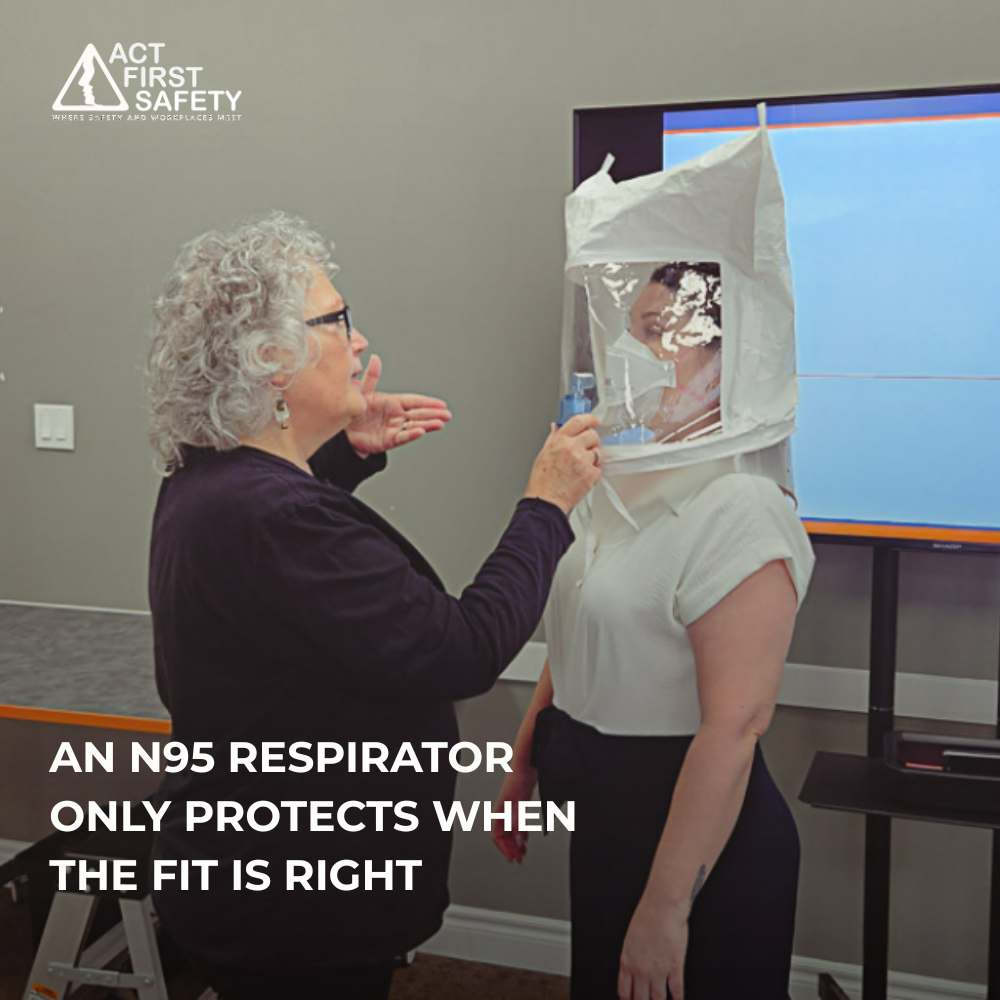
The fit of a respirator is critical because even a tiny gap results in a significant compromise in protection, despite it having a highly efficient filter built in. Tests show that a 1% leak can drop the protection from 95% to less than 50%.
When undergoing respirator fit testing, you need to make sure it's performed by a trained and competent fit tester using standardized procedures.
That is the key to achieving the perfect fit and the highest level of protection.
What a fit test should include
Every single fit test should cover the following:
- User seal checks for negative and positive pressure
- Donning and doffing procedures
- Strap fit check
- Perfect nosepiece molding
- Proper storage
- Best recording-keeping practices
In Canada, CSA Z94.4 recommends annual respirator fit testing.
That said, there is some disparity on when disposable N95s should be changed. Nonetheless, the effectiveness of the N95 respirator decreases in a short period of time. Following the manufacturer’s instructions and corporate policies guarantees the best results.
Top 5 Wearing Mistakes For N95 Respirators & How to Avoid Them
Mistakes are common in real workplaces and healthcare settings. It is critical to avoid making the ones we have listed below, as these errors can seriously put you at risk.
Mistake 1: Trusting a Bad Fit Test
Unprofessional fit tests conducted informally can cause a false sense of security. NIOSH data shows that in workplaces where no one is properly trained, at least 30% of workers passed their test even when they shouldn't have. You can only get a proper seal if someone who knows what they're doing follows CSA-approved protocols and has the expertise required to conduct N95 fit testing.
Mistake 2: Thinking One Model Fits All
Just because you passed a fit test on one particular model, like a 3M 1870+, doesn't mean you can go ahead and use any N95 you want. Each make and model is different and changing brands or models requires another fit test. US OSHA data shows that when workers switch to a different model, they fail fit tests about 25-40% of the time.
Mistake 3: Putting Straps on Incorrectly
Looping the straps around your ears like a surgical mask, placing them up on top of each other, not using both straps or wearing them over clothing reduces protection. Incorrect usage is likely to break the seal and could twist the mask enough so that it is not effective.
The right way to wear the mask is to place the lower strap at the back of your neck, just below your ears, and the upper strap high up at the top of your head. Never put straps over your ears or cross them. Placing them over your ears can hurt, leading to pain or headaches.
Mistake 4: Using One Disposable N95 for Too Long
Using the same N95 over multiple hours or days leads to saturation and deformation, thus adversely impacting the mask’s filtration effectiveness and fit. For maximum protection, follow the manufacturer's guidelines and your company’s policy. Some organizations limit use to as low as fixed 20-minute intervals before a new respirator has to be used.
Mistake 5: Adjusting Your Nosepiece Incorrectly
A single-finger pinch or a sharp crease in the nosepiece creates a channel for air to leak in. To get a smooth and continuous seal, you need to mould the nosepiece with both hands, from the bridge of your nose to its tip, making sure the nosepiece is in constant contact with your cheeks and nose.
Avoiding An Uncomfortable Fit
Tolerating an ill-fitting respirator promotes non-compliance. Not only will workers not want to wear an uncomfortable respirator, but it will also lead to more face-touching and contamination. In fact, studies have shown discomfort can halve compliance.
To encourage the safe use of respirators, employers should provide a variety of NIOSH-approved respirator models to test with. This will help everyone find a good fit that gives a proper seal, is comfortable, and that they'll actually want to wear for the entire duration when needed.
Comfort is critical for real-world protection. NIOSH field studies show that 80% compliance is about comfort. Simply put, workers are more likely to wear respirators correctly when needed if they're comfortable.
Making Your Respirator Fit Comfortably and Work Properly
While the onus of hosting a respirator fit test lies on the shoulders of the employer, there are certain elements of the mask you can check to ensure the fit is right and comfortable.
Features that improve comfort include:
- An easily adjustable metal nose piece
- Premium braided straps
- Low breathing resistance
- Cushioned nose foams
- Softer filtration material
Tip: Employers who provide options such as various sizes, makes, and models that accommodate different face shapes encourage greater worker acceptance and buy-in.
Fit testers should encourage workers to try out a few different NIOSH-approved models to see which one seals right, especially when one model is required to be worn all day. If you're making workers wear ill-fitting options, you're basically undermining the whole respiratory protection program.
Daily best practices:
Workers can do their bit to ensure every workday scores high on the protection front by following these best practices:
- Inspect each mask before use for any imperfections, damage, soiling, or deformation
- Store them in clean, dry locations
- Do not fold them in a way that causes squishing or deformation
- Never bend or crush N95s in pockets
- Don’t make repairs or adjustments like stapling or taping
- Arming Your Respiratory Program against Common Mistakes
A well-selected respirator only provides reliable protection when it is properly fitted, consistently maintained, and supported by a comprehensive respiratory protection program. This includes thorough training, regular fit testing, and clear day-to-day practices.
To ensure effectiveness, review your current approach against common pitfalls and best-practice standards, and confirm that every worker who relies on respiratory protection receives meaningful, hands-on mask fit testing and training, not just a superficial check.
Conclusion
Wearing a respirator at work isn’t a formality – it is protection against serious harm. From fit tests to storage and replacement protocols, employers and workers must follow all rules concerning the use of N95 masks thoroughly to maintain compliance and safety.
Looking for the best place to learn respirator fit testing near me? Act First Safety hosts OHSA-compliant respirator fit testing programs at its Scarborough facility in Ontario. Located off Highway 401, our training center is the best place to avail of a variety of certified training programs. Contact us to check available courses and their dates.
FAQs
Can the presence of facial hair affect the effectiveness of an N95 respirator?
Yes. Having facial hair can interfere with the sealing capabilities of a respirator, thus reducing its effectiveness and increasing the risk of exposure.
Do all workers need the same type of respirator?
No. The type of respirator a worker requires depends on the kind of hazards they are exposed to at the workplace. For example, those working in asbestos environments will require more protective masks.
Can N95 respirators protect against gases and vapors?
No. Standard N95 respirators are not effective in filtering the particulate matter contained in harmful gases and vapors. These require the use of specialized masks.